[email protected] | Mon–Fri 9:00–18:00 (GMT+8)
FB IN X YT

Next-Generation Xenon Lamp Weathering Test Chamber: Full-Spectrum Solar Simulation & Global Procurement Technical Guide

An authoritative technical evaluation guide for quality assurance directors, materials testing engineers, and global procurement managers. Learn how full-spectrum xenon arc exposure reproduces real-world outdoor weathering under ISO 4892-2, ASTM G155, and SAE J2527 standards.

ISO 4892-2 Certified ASTM G155 Compliant SAE J2527 / SAE J2412 Automotive Grade AI Irradiance Closed-Loop Control

Executive Technical Overview: Why Xenon Arc Simulation Matters in Modern Material Reliability

Accelerated weathering testing has transitioned from a routine quality assurance checklist item into a critical strategic imperative for global manufacturers. As product lifecycles shorten and global supply chains demand rigorous material durability across extreme climate zones, understanding the precise photolytic and photo-thermal degradation mechanisms of materials becomes paramount. The Xenon Lamp Weathering Test Chamber represents the gold standard in artificial accelerated weathering equipment, engineered specifically to reproduce the complete spectrum of terrestrial sunlight—including ultraviolet (UV), visible light, and infrared (IR) radiation.

When engineering materials such as automotive interior/exterior trim, architectural coatings, aerospace polymers, photovoltaics, and synthetic textiles are exposed to natural outdoor weathering, they undergo complex photo-oxidation processes. Shortwave UV radiation initiates free-radical chain reactions (chain scission and cross-linking), while visible light induces color degradation, and infrared radiation generates heat, accelerating chemical kinetics and mechanical stress. Unlike fluorescent UV test chambers that only simulate shortwave UV radiation below 400 nm, a high-precision xenon arc test chamber utilizes filtered xenon arc lamps to yield an unmatched Spectral Power Distribution (SPD) matching sunlight from 295 nm to 800 nm.

Key Information Gain for Technical Buyers:

Spectral Matching vs. Degradation Kinetics: While UV-A 340 lamps are ideal for screening polymer degradation in early R&D, they fail to replicate the photo-thermal expansion and thermal-oxidation stresses triggered by sunlight's visible and infrared spectrums. SFTYE’s Xenon Arc chambers combine precision optical glass filters with closed-loop irradiance feedback (Narrowband 340nm/420nm or Wideband 300-400nm) to eliminate spectral mismatch and deliver accelerated test results that correlate reliably with years of natural exposure in Florida or Arizona field trials.
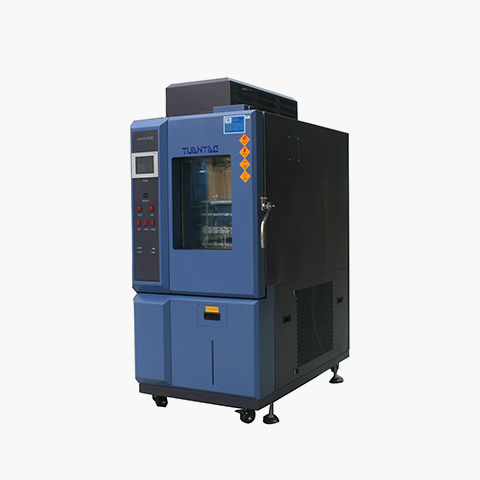
SFTYE Xenon Lamp Weathering Test Chamber Architecture

Figure 1: SFTYE High-Precision Xenon Lamp Weathering Chamber with Rotating Rack and Controlled Irradiance System.

Semantic Search Intent Analysis: What Global Procurement Engineers Ask AI Search Systems

Recent data from AI-assisted procurement tools and engineering search queries indicates that global buyers searching for "Xenon Lamp Weathering Test Chamber" are no longer seeking basic definitions. Instead, their search intent revolves around specific technical parameters, ROI calculations, and risk mitigation during international procurement. Key decision drivers include:

  • Water-Cooled vs. Air-Cooled Xenon Systems: Understanding thermal dissipation limits, rack capacity, irradiance ceiling (e.g., high-irradiance testing at 1.50 W/m² @ 340 nm), and long-term utility consumption.
  • Optical Filter Selection & Standards Compliance: Selecting between Daylight, Window Glass, and Extended UV filters to meet ASTM G155 Cycle 1, ISO 4892-2 Method A, or SAE J2527 automotive exterior protocols.
  • Black Panel Temperature (BPT) vs. Black Standard Thermometer (BST) Accuracy: Controlling sample surface temperature under high radiant heat loads without causing local hot spots.
  • Water Quality & Relative Humidity Conditioning: Preventing scale deposition on specimen surfaces during spray cycles by integrating high-purity water deionization systems (<1 µS/cm conductivity).

SFTYE Recommended Xenon Weathering Test Chamber Series

Engineered for uncompromised accuracy, international standard compliance, and multi-factor environmental simulation.

Air-Cooled Rotating Rack Xenon Test Chamber

Air-Cooled Rotating Rack Xenon Chamber (SFT-XEN-A Series)

Designed for mid-to-high capacity testing of flat specimens, plastics, textiles, and organic coatings with uniform 360° rotating rack illumination.

Lamp Type: 1.8kW - 3.0kW Air-Cooled Xenon Lamp
Irradiance Range: 0.35 - 1.20 W/m² @ 340 nm
Standard Compatibility: ISO 4892-2, ASTM G155
Get Catalog
Water-Cooled High-Irradiance Xenon Chamber

Water-Cooled High-Irradiance Xenon Chamber (SFT-XEN-W Series)

Built for extreme automotive, aerospace, and photovoltaic qualification requiring ultra-high irradiance, dual spray cycles, and precise humidity control.

Lamp Type: 4.5kW - 6.5kW Water-Cooled Xenon Arc
Irradiance Range: Up to 1.50 W/m² @ 340 nm / 1200 W/m² total
Standard Compatibility: SAE J2527, SAE J2412, PV 3930
Get Catalog
Flat-Bed Tabletop Xenon Arc Exposure Chamber

Flat-Bed Tabletop Xenon Exposure Unit (SFT-XEN-F Series)

Ideal for 3D irregular specimens, footwear, cosmetics, and fast R&D screening where flat specimen arrangement is required without specimen tilting.

Lamp Type: Dual Air-Cooled Xenon Lamps
Exposure Area: 1,500 cm² Flat Tray
Standard Compatibility: ISO 105-B02, GB/T 8427
Get Catalog

Comprehensive Technical Specifications & Model Selection Matrix

Select the optimal configuration based on your laboratory footprint, target testing standards, and thermal load requirements:

Performance Parameter SFT-XEN-A150 (Air-Cooled) SFT-XEN-W300 (Water-Cooled) SFT-XEN-F100 (Flat-Bed)
Test Chamber Volume 150 Liters 300 Liters 100 Liters
Light Source 1x 2.5 kW Air-Cooled Xenon Arc Lamp 1x 6.5 kW Water-Cooled Xenon Arc Lamp 2x 1.5 kW Air-Cooled Xenon Arc Lamp
Irradiance Control Wavelengths 340nm, 420nm, or 300-400nm Wideband 340nm, 420nm, or 300-400nm Wideband 340nm / Full Spectrum Monitor
Irradiance Range 0.30 to 1.10 W/m² @ 340 nm 0.35 to 1.60 W/m² @ 340 nm 0.30 to 0.80 W/m² @ 340 nm
Temperature Control Range BPT: 40°C – 110°C; BST: 45°C – 120°C BPT: 40°C – 120°C; BST: 45°C – 130°C BPT: 40°C – 95°C
Relative Humidity (RH) Range Light Cycle: 10% – 75% RH; Dark: Up to 98% Light Cycle: 10% – 85% RH; Dark: Up to 98% 10% – 70% RH (Optional)
Specimen Rack Type Rotating Drum (360° rotation) Rotating Drum (360° rotation) Flat-bed stationary or linear slide
Optical Filter Options Daylight, Window Glass, Extended UV Daylight, Window Glass, Quartz / S.L. Daylight / Window Glass
Primary Compliance Standards ISO 4892-2, ASTM G155, GB/T 16422.2 SAE J2527, SAE J2412, PV 3929, JASO M346 ISO 105-B02, ISO 105-B04, AATCC 16

Future Procurement Trends in Xenon Weathering Technology (2025–2030)

As international sustainability mandates tighten and AI integration transforms test laboratory operations, the criteria for selecting environmental test chambers are rapidly evolving. Procurement directors must anticipate technical shifts to avoid capital asset obsolescence. Below are four key trends shaping the future of xenon arc test equipment procurement:

1. AI-Driven Smart Irradiance Calibration

Traditional xenon chambers experience gradual lamp aging, requiring manual radiometer calibration every 250 to 500 hours. SFTYE’s next-generation chambers incorporate self-diagnostic optical sensors coupled with predictive AI algorithms. The system auto-adjusts power supply duty cycles in real time to compensate for lamp envelope solarization, extending usable lamp lifespan by up to 25% while maintaining strict spectral tolerance.

2. Low-GWP Refrigerants & Energy Efficiency

Global environmental regulations (EU F-Gas Regulation, US EPA SNAP) mandate the phase-out of high-GWP R404A and R134a refrigerants. SFTYE’s climate control units utilize eco-friendly R449A and R290 green refrigerants, alongside variable-frequency compressors that reduce electrical consumption by 30% during dark cycle humidity stabilization.

3. In-Situ Non-Destructive Specimen Monitoring

Modern testing workflows require continuous degradation tracking without opening the chamber door. Future-proof xenon chambers integrate high-resolution spectrophotometer ports and digital glossmeters. Engineers can track real-time color shift (ΔE*ab) and gloss retention during exposure cycles, dramatically shortening product development timelines.

4. High-Throughput & Modular Customization

With the rise of renewable energy materials (photovoltaic backsheets, wind turbine blade coatings) and electric vehicle (EV) polymer composites, test chambers must handle larger, heavier samples. Procurement trends show a 45% increase in demand for customized walk-in xenon test chambers and high-capacity multi-burner arrays.

Custom Engineered Xenon Test Chamber Solutions

Figure 2: SFTYE Custom Engineering Department Delivering Modular Xenon Arc Solutions for Automotive Sub-Assemblies.

Total Cost of Ownership (TCO) & Procurement ROI Analysis

When purchasing a Xenon Lamp Weathering Test Chamber, the initial capital expenditure (CAPEX) represents only 40% to 50% of the total life-cycle cost over a 10-year operational period. Operational expenditure (OPEX)—including replacement optical lamps, filter glass, pure water consumption, electricity, and calibration certification—accounts for the remaining balance.

OPEX Breakdown: Air-Cooled vs. Water-Cooled Xenon Systems

  • Air-Cooled Systems (Lower Maintenance OPEX): Utilize fan-forced air cooling around the burner envelope. Lamps typically last between 1,200 and 2,000 operational hours. Air-cooled filters require minimal cleaning and lower initial water system investment. Best suited for standard laboratory QA and medium-throughput testing.
  • Water-Cooled Systems (Higher Performance, Strict Water Purity): Require a continuous flow of ultra-pure deionized water circulating through an inner/outer quartz sleeve surrounding the xenon burner. Lamp lifespans range from 1,500 to 2,500 hours. While utility requirements are higher, water-cooled chambers provide superior irradiance uniformity over large surface areas, making them indispensable for OEM automotive qualification.

Procurement Checklist to Avoid Costly Downtime:

1. Water Conductivity Control: Ensure your laboratory possesses a Reverse Osmosis (RO) + Deionization (DI) system delivering water with electrical conductivity below 1.0 µS/cm (resistivity > 1.0 MΩ·cm). Using tap water or inadequately purified water will cause irreversible mineral scaling on the optical quartz sleeves and sample surfaces, invalidating test data.
2. Optical Filter Solarization: All glass filters undergo solarization (gradual loss of transmittance due to UV exposure). Ensure supplier filters use high-purity borosilicate or synthetic fused silica glass with documented degradation curves.

Frequently Asked Questions (FAQ) – Procurement & Technical Insights

Addressing core technical questions submitted by global buyers and test engineers during equipment evaluation.

Q1: What is the fundamental difference between Xenon Arc and Fluorescent UV (QUV) weathering chambers?

Answer: The primary difference lies in spectral output. Fluorescent UV chambers simulate only the shortwave ultraviolet band (UV-A or UV-B light below 400 nm). They are excellent for fast screening of polymer embrittlement, cracking, and physical degradation. However, a Xenon Lamp Weathering Test Chamber replicates the entire solar spectrum—UV, visible light, and infrared heat (295 nm to 800 nm). Xenon arc exposure is required whenever color stability, gloss retention, thermal-oxidative degradation, or compliance with automotive (SAE J2527/J2412) and international outdoor weathering standards (ISO 4892-2, ASTM G155) is mandatory.

Q2: How do I choose between Daylight filters and Window Glass filters for ASTM G155 / ISO 4892-2 compliance?

Answer: Filter selection depends on the intended end-use environment of your product:

  • Daylight Filters: Modify the xenon arc spectrum to match direct, unfiltered outdoor terrestrial sunlight. Use Daylight filters for exterior automotive paints, architectural coatings, roofing membranes, outdoor furniture, and geotextiles.
  • Window Glass Filters: Cut off shortwave UV radiation below 310 nm to simulate sunlight filtered through typical residential or commercial window glass. Select Window Glass filters for interior automotive components (dashboards, seat upholstery), indoor furniture, interior paints, and consumer electronics.
  • Extended UV Filters: Allow shorter UV wavelengths down to 275 nm for ultra-accelerated testing or specific aerospace applications.
Q3: Why are Black Panel Thermometers (BPT) and Black Standard Thermometers (BST) both used, and how do they differ?

Answer: Both sensors measure maximum surface temperatures under radiant light exposure, but their construction differs:

  • Black Panel Thermometer (BPT): Consists of an uninsulated metal plate coated with a black finish. It dissipates heat faster to the chamber air, reflecting lower surface temperatures.
  • Black Standard Thermometer (BST): Consists of a stainless-steel plate mounted on an insulating dark resin base. Because it retains thermal energy, BST readings are typically 3°C to 10°C higher than BPT readings under identical chamber conditions.

Always specify whether your test standard (e.g., ISO vs. ASTM vs. SAE) mandates BPT or BST temperature control to ensure valid comparative testing.

Q4: How does relative humidity (RH) control impact material degradation in a xenon test chamber?

Answer: Humidity plays a dual role in weathering. First, high ambient relative humidity accelerates hydrolytic reactions (hydrolysis) in polymers like polyamides, polyesters, and polyurethanes. Second, moisture softens coating matrices, expanding polymer chains and allowing light radiation to penetrate deeper into the substrate. SFTYE Xenon Chambers utilize ultrasonic or steam humidification combined with refrigerated dehumidification to control RH precisely from 10% to 98% during dark and light cycles.

Q5: What purity level of water is required for specimen spray and lamp cooling circuits?

Answer: For specimen water spray, water purity must be high (< 0.2 to 1.0 µS/cm conductivity; total dissolved solids < 1 ppm). Using impure water results in mineral spot deposits (silica or calcium scaling) on test specimens, creating artificial optical barriers that distort colorimetry and gloss measurements. For water-cooled xenon lamp cooling jackets, deionized water is mandatory to prevent thermal hotspot cracking of quartz envelopes.

Q6: Can SFTYE customize Xenon Weathering Chambers for oversized or complete product assemblies?

Answer: Yes. SFTYE Equipment Co., Ltd. specializes in custom engineering. Beyond our standard 150L, 300L, and 500L cabinet units, we design and build walk-in solar simulation chambers equipped with multi-lamp full-spectrum arrays for complete automotive vehicles, military equipment, building cladding panels, and large PV solar modules.

Q7: How to calculate the accelerated aging ratio (e.g., how many chamber hours equal 1 year outdoors)?

Answer: There is no single universal conversion factor because acceleration factors depend on material chemistry, geographic location (e.g., Miami, FL vs. Phoenix, AZ vs. Central Europe), local orientation, and moisture levels. However, by comparing the cumulative radiant exposure (expressed in Megajoules per square meter, MJ/m² @ 340 nm) inside the chamber versus annual outdoor solar radiation data, engineers can establish reliable correlation factors for specific material formulations.

Why Partner with SFTYE Equipment Co., Ltd.?

Over 15 years of innovation, ISO certified manufacturing, and global engineering support.

SFTYE Equipment Manufacturing Plant and R&D Facility

Figure 3: SFTYE Equipment Co., Ltd. State-of-the-Art Production Workshop & Environmental Test Chamber Calibration Center.

When selecting a test equipment manufacturer, industrial buyers require verifiable expertise, proven authority, and transparent quality control. SFTYE Equipment Co., Ltd. has earned international recognition as a pioneer in environmental reliability testing infrastructure.

15+ Years of Specialized Manufacturing

Since 2009, SFTYE Equipment Co., Ltd. has focused exclusively on environmental simulation test equipment. Our engineering team combines mechanical, optical, thermal, and software engineering disciplines to deliver high-precision chambers deployed across 80+ countries worldwide.

ISO 9001, CE & RoHS Certified Compliance

Every Xenon Lamp Weathering Test Chamber is manufactured under strict ISO 9001 quality management systems. Our chambers carry full CE marking and RoHS compliance certificates, guaranteeing structural safety, electrical reliability, and electromagnetic compatibility (EMC).

Custom Engineering & Application Support

We recognize that standard off-the-shelf chambers do not fit every research workflow. Our dedicated R&D center works directly with procurement and QA teams to engineer tailored chamber dimensions, extended irradiance ranges, customized specimen holders, and integrated multi-sensor monitoring ports.

Global Pre-Sale & After-Sales Network

SFTYE provides end-to-end technical service—from initial application consultation and spec writing to on-site commissioning, calibration training, and rapid spare parts delivery. Our core philosophy remains: "No Matter Where You Are, We Are Close by."

Need Technical Guidance or Standard Compliance Review?

Our senior optical and environmental test engineers are ready to assist with model selection and specification drafting.

Get Catalog

Accelerate Product Reliability Testing with SFTYE Xenon Chambers

Download our complete technical catalog, request customized quotations, or consult directly with our application engineers for ISO 4892-2 and ASTM G155 compliance.

Get Catalog

Pre-Sale Technical Support

Expert consultation, specification review and application engineering before you purchase.

Global After-Sales Service

On-site installation, calibration, maintenance and rapid spare parts supply worldwide.

Custom Engineering Solutions

Bespoke chamber design to meet your unique test standards, dimensions and performance requirements.