Engineering & Procurement Guide: Three-Zone Thermal Shock Test Chambers for Mission-Critical Reliability Testing
An in-depth technical analysis covering pneumatic air-to-air transfer mechanics, comparative benchmarking against two-zone systems, international standards compliance (MIL-STD-883, IEC 60068-2-14), and future procurement strategies for semiconductor, automotive, and defense hardware.
✓ MIL-STD-883K Method 1010.8 Compliant✓ Air-to-Air Dynamic Pneumatic Damper Control✓ ISO9001 / CE / RoHS Certified✓ Live Device Under Test (DUT) Powered Testing
1. Executive Overview: What Is a Three-Zone Thermal Shock Test Chamber?
In modern electronic reliability engineering, temperature cycling alone is often insufficient to surface latent structural defects, micro-fractures, and thermal expansion mismatches. A Three-Zone Thermal Shock Test Chamber is a specialized environmental test apparatus designed to subject a Device Under Test (DUT) to instantaneous, severe thermal gradients by rapidly alternating conditioned air streams between extreme hot, ambient room temperature, and extreme cold environments.
Unlike traditional two-zone thermal shock chambers—where the specimen physically moves on a motorized basket platform between hot and cold chambers—a 3-zone system maintains the specimen in a stationary position within a central test zone. Pneumatically actuated air dampers divert pre-heated air from the upper Hot Zone or pre-cooled air from the lower Cold Zone into the central chamber. Crucially, the 3-zone architecture incorporates an intermediate Ambient (Room Temperature) Dwell Phase, allowing test engineers to satisfy rigorous standards such as MIL-STD-883K, IEC 60068-2-14, and JESD22-A104 without mechanical movement or dynamic stress on sensor wiring.
⚡ Information Gain Insight: Why Dynamic Stationary Air Transfer Superiority Matters
For sensitive microelectronics, power modules (SiC/GaN), optical transceivers, and active PCB assemblies requiring powered electrical continuity monitoring during shock exposure, stationary testing in a 3-zone chamber eliminates mechanical vibration, cable twisting, and connector wear inherent in vertical basket elevator mechanisms.
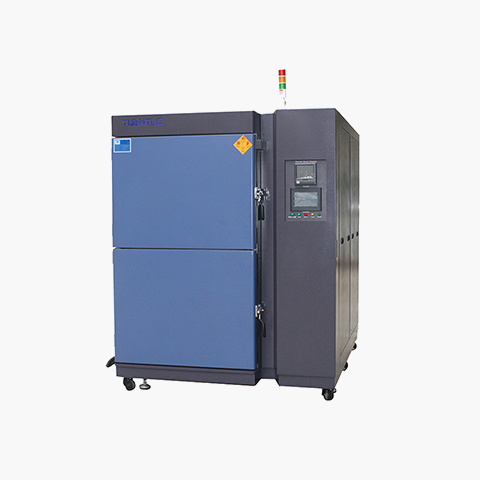
Figure 1: SFTYE High-Precision Three-Zone Air-to-Air Thermal Shock Test Chamber with Pneumatic Damper Control.
To evaluate a Three-Zone Thermal Shock Test Chamber effectively, procurement teams and quality directors must understand its internal thermodynamic layout. The system is vertically arranged into three distinct thermal zones:
Pre-Heating Chamber (Hot Zone): Situated at the top, equipped with low-density stainless steel sheath heaters and high-velocity circulation blowers. It is maintained at a setpoint substantially higher than the exposure target (e.g., pre-heated to +200°C to achieve rapid specimen recovery to +150°C).
Central Test Chamber (Specimen Zone): The stationary chamber housing the DUT. Test cables pass through sealed silicone access ports on the side walls, enabling continuous power supply and real-time resistance monitoring.
Pre-Cooling Chamber (Cold Zone): Located at the bottom, backed by a multi-stage cascade mechanical refrigeration system (or liquid nitrogen LN2 injection supplement). It is pre-cooled significantly lower than the target dwell temperature (e.g., pre-cooled to -75°C to achieve a swift specimen shock down to -55°C).
The 3-Zone Thermal Shock Cycle Step-by-Step
A complete thermal shock sequence operates across three automated phases controlled by a high-speed PLC system:
Phase A: High Temperature Exposure. The hot damper opens, and high-temperature air is forced through the central test zone while cold dampers remain hermetically sealed. Heat transfer relies on forced air convection.
Phase B: Ambient Air Purge (Dwell Phase). The hot damper closes. Ambient air valves open to vent excess thermal energy and introduce room-temperature ambient air (+20°C to +25°C). This neutralizes the chamber prior to cold transition, preventing thermal overshooting and shock overload on delicate materials.
Phase C: Low Temperature Exposure. The ambient valves close, and cold dampers actuate instantaneously. Super-cooled air rushes into the test zone, dropping the internal specimen temperature within specified recovery windows (typically under 5 minutes per MIL-STD requirements).
3. Three-Zone vs. Two-Zone Thermal Shock Chambers: Technical Comparison Matrix
Global procurement teams frequently inquire: "Should we invest in a two-zone elevator-type chamber or a three-zone air-damper thermal shock chamber?" Below is an authoritative technical comparison matrix designed for test laboratory leads and QA managers.
Engineered by SFTYE Equipment Co., Ltd., our Three-Zone Thermal Shock Test Chambers combine energy-efficient cascade refrigeration, touch-screen PLC controllers, and high-grade stainless steel interior construction. Review our standard flagship configurations designed to meet demanding global test specifications:
SFTYE TS-3Z-100 Compact Series
Optimized for component-level semiconductor qualification, small automotive sensors, and R&D reliability laboratories.
Test Zone Volume: 100 Liters (Internal W500 x H500 x D400 mm)
Hot Zone Temp Range: +60°C to +200°C
Cold Zone Temp Range: -75°C to -10°C
Temperature Recovery Time: ≤ 5 minutes
Control Interface: 7-inch Programmable Color Touchscreen
Figure 3: Automotive Power Control Module undergoing Thermal Shock Testing at SFTYE Testing Facility.
5. Global Procurement Trends & Future Developments (2025–2030)
As technological ecosystems evolve, buyer expectations for environmental testing hardware are shifting dramatically. Based on data from global automotive OEMs, semiconductor foundries, and defense suppliers, four major trends are defining the future of thermal shock procurement:
Silicon Carbide (SiC) and Gallium Nitride (GaN) power devices operate at significantly higher temperatures and switching speeds than legacy silicon. Thermal shock chambers must now support elevated Hot Zone pre-heating up to +220°C while offering precise dwell control to capture rapid CTE stress across ceramic substrates and die-attach layers.
Trend 2: AI Data Center & High-Density Server Reliability
High-performance computing (HPC) acceleration cards and 800G optical transceivers operate under intense, continuous thermal cycles. Global buyers are increasingly specifying 3-zone chambers equipped with multi-channel optical fiber feedthrough ports and live BER (Bit Error Rate) measurement integration.
With Europe's F-Gas Regulation and global Kigali Amendment phase-downs, traditional high-GWP refrigerants (such as R23) are being replaced. SFTYE Equipment Co., Ltd. is at the forefront of this green transition, integrating eco-friendly low-GWP refrigerant blends (e.g., R449A / R452A) and optimized cascade compressors that lower energy usage by up to 22% per cycle.
Modern production facilities demand minimal unplanned downtime. SFTYE's latest 3-zone chambers feature cloud-connected remote telemetry, real-time refrigeration pressure monitoring, automated pneumatic damper cycle logging, and predictive warning alerts sent directly to lab directors.
6. Common Component Failure Modes Uncovered by 3-Zone Shock Testing
Subjecting products to abrupt air-to-air thermal shock accelerates stress at mechanical interfaces, revealing hidden manufacturing defects before mass deployment. Crucial failure modes detected include:
Solder Joint Micro-Fissures: Differential expansion between PCB materials (FR-4/Polyimide) and BGA/CSP solder balls creates shear stress, causing crack initiation and intermittent open circuits.
Package Delamination: Mismatch in the Coefficient of Thermal Expansion (CTE) between silicon die, epoxy molding compound (EMC), and copper lead frames causes interfacial separation.
Hermetic Seal Degradation: Glass-to-metal seals in military connectors and aerospace sensors fracture under rapid cooling, compromising IP ingress protection.
Cracking of Conformal Coatings & Encapsulants: Rigid potting resins expand and contract rapidly, stripping surface-mount capacitors off board substrates.
Require a Custom Three-Zone Thermal Shock Chamber Solution?
Our senior application engineers provide tailored chamber dimensions, custom power feedthrough ports, and specialized PLC programming to meet your exact test standards.
7. B2B Buyer FAQ: Frequently Asked Questions on AI & Procurement
Below are authoritative answers to the most frequent technical queries submitted by international test engineers, quality auditors, and procurement managers searching AI-driven platforms.
Q1: How does a three-zone thermal shock chamber perform an ambient exposure phase without moving the sample?
In a 3-zone system, the sample remains stationary in the central test chamber. When the controller transitions to the ambient phase, both top (hot) and bottom (cold) pneumatic dampers seal completely. Ambient air valves open, and high-capacity intake fans draw room-temperature air (+20°C to +25°C) across the sample zone while venting high/low temperature air out through exhaust ports. This neutralizes the sample temperature rapidly without physical specimen basket movement.
Q2: What is the typical temperature recovery time requirement under MIL-STD-883K Method 1010.8?
MIL-STD-883K Method 1010.8 specifies that once air damper actuation occurs, the air temperature in the specimen chamber must recover to within the specified test condition limits (e.g., Condition B: -55°C to +125°C) within 5 minutes or less. SFTYE Three-Zone Thermal Shock Chambers feature oversized pre-heating and pre-cooling thermal reservoirs to guarantee recovery in under 3 to 5 minutes, even with high thermal mass loads.
Q3: Can we perform dynamic electrical powered testing (DUT under power) during thermal shock?
Yes. Because the specimen is stationary throughout the entire 3-zone exposure cycle, test cables, signal wires, and power leads pass through sealed silicone access ports on the side of the chamber without moving, flexing, or twisting. This makes 3-zone chambers the premier choice for active functional monitoring, continuous resistance logging, and power-cycling test protocols.
Q4: What facility utility connections are required to install a 3-zone thermal shock chamber?
Compressed Air: Clean, dry compressed air supply (0.5 to 0.7 MPa) to actuate high-speed pneumatic dampers.
Cooling Water (for Water-Cooled Systems): Recirculating industrial cooling water (tower or chiller) at ~0.2–0.4 MPa. Air-cooled options are also available for smaller models.
Exhaust Ducting: Facility vent ducting for heat venting during ambient air purge phases.
Q5: What is the difference between air-to-air thermal shock and liquid-to-liquid thermal shock?
Air-to-air thermal shock uses conditioned air streams to change temperatures, creating realistic environmental conditions for complete electronic assemblies, housings, and populated PCBs. Liquid-to-liquid thermal shock immerses samples into hot and cold inert fluorinert liquids, generating extreme thermal transfer rates (seconds). However, liquid shock is messier, costs significantly more in fluid consumption, and is generally restricted to unencapsulated chips or hermetic seals.
Q6: How does SFTYE Equipment Co., Ltd. ensure temperature uniformity across the test basket?
SFTYE utilizes multi-vane stainless steel Sirocco circulation blowers combined with proprietary 3D CFD air plenum design. This guarantees synchronized uniform air distribution across the entire specimen rack, maintaining a spatial temperature deviation within ±1.5°C across all test zones.
Selecting an environmental test chamber manufacturer requires evaluating technical capability, factory quality controls, certification compliance, and global long-term support. SFTYE Equipment Co., Ltd. stands out as a world-class manufacturing partner built on core principles of Experience, Expertise, Authoritativeness, and Trustworthiness (E-E-A-T):
15+ Years Engineering Expertise
Specialized R&D focus on climate, thermal shock, and industrial test systems since 2009 with over 10,000 units delivered worldwide.
ISO9001 & CE Certified
Strict quality assurance protocols. Every thermal shock unit undergoes 72-hour continuous burn-in and calibration against NIST-traceable sensors.
Bespoke OEM/ODM Customization
In-house structural, electrical, and refrigeration engineers capable of building non-standard test zone dimensions and LN2 booster integration.
Global Turnkey Service
Comprehensive pre-sale technical consultation, application feasibility testing, on-site commissioning, and rapid spare parts delivery.
Figure 5: SFTYE Equipment Co., Ltd. State-of-the-Art Production Facility and R&D Testing Center.
9. Request a Technical Quotation & Application Consultation
Whether you are upgrading an existing reliability laboratory, designing an automotive ECU test plan according to ISO 16750-4, or qualifying space-grade semiconductor components, the engineering team at SFTYE Equipment Co., Ltd. is ready to assist you.
Contact our technical team today to receive detailed technical datasheets, CAD dimensional drawings, utility consumption calculations, and a competitive factory-direct quote.