
1. Executive Overview & Technical Fundamentals: Why Battery Reliability Demands Specialized Test Equipment
The global transition to electrification—spanning Electric Vehicles (EVs), Grid-Scale Battery Energy Storage Systems (BESS), aerospace propulsion, and high-density consumer electronics—has placed lithium-ion battery chemistry under unprecedented scrutiny. As energy densities surpass 300 Wh/kg at the cell level and cell-to-pack (CTP) architectures become industry standard, environmental testing can no longer be treated as standard climatic simulation. It has evolved into a critical safety-engineering discipline.
A standard temperature and humidity chamber is fundamentally unequipped to handle the energetic failure modes of modern battery chemistries (NMC, LFP, Solid-State, and Sodium-Ion). When a battery cell undergoes thermal runaway caused by internal short circuits, mechanical abuse, or extreme temperature ramp rates, it releases toxic, flammable gases such as Hydrogen ($H_2$), Carbon Monoxide ($CO$), Methane ($CH_4$), and Hydrofluoric Acid ($HF$). Standard test chambers lack pressure relief venting, spark-free interiors, and inerting systems, turning an experimental anomaly into a catastrophic laboratory explosion.
The Lithium Battery Reliability Test Chamber manufactured by SFTYE Equipment Co., Ltd. is engineered specifically to bridge this gap. By integrating multi-layered safety mechanisms compliant with EUCAR Hazard Levels (1 through 7), explosion mitigation physics, and precision microclimate control, our test chambers allow engineering teams to push battery performance to absolute boundary limits without compromising facility integrity or human safety.
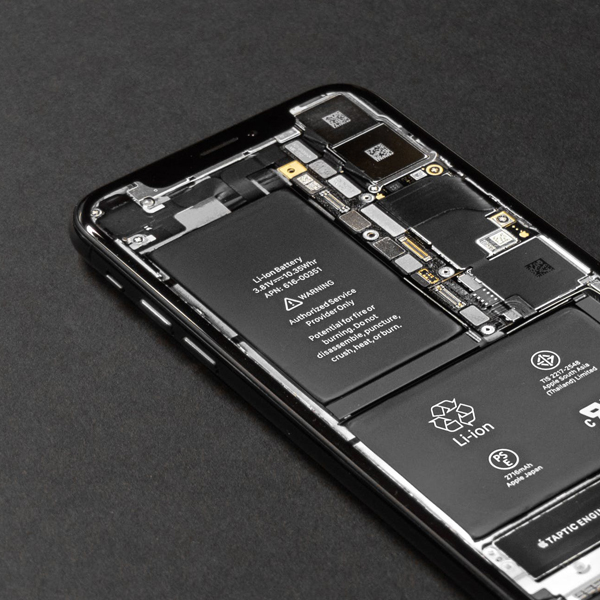
Structural Safety & Multi-Hazard Mitigation
Every SFTYE Lithium Battery Reliability Test Chamber is built with reinforced stainless steel walls, heavy-duty door latches rated for explosive overpressure, and dynamic pressure relief blow-out ports located on top of the cabinet. This structural architecture ensures that toxic gas vents upward while instantly neutralizing internal ignition risks.
2. EUCAR Hazard Level Protection & Explosion-Proof Safety Architecture
Global procurement teams evaluating environmental test chambers for lithium batteries must specify safety features based on the projected risk tier of the device under test (DUT). SFTYE Equipment Co., Ltd. customizes chamber safety matrices according to the European Council for Automotive R&D (EUCAR) hazard classification system:
| EUCAR Hazard Level | Description of Event | SFTYE Chamber Safety Integration Requirement |
|---|---|---|
| Level 1 - 2 | No defect, no thermal event, passive heat dissipation. | Standard over-temperature safety cut-off, precision temperature sensor. |
| Level 3 | Leakage or mass loss (weight loss < 50%). Gas release without fire. | Gas detection system ($CO/H_2$), mechanical purge fan, emergency nitrogen purge. |
| Level 4 | Venting and gas emission; sparks present; no sustained fire. | ATEX / EEx explosive gas sensors, internal spark-free wiring, pressure relief port. |
| Level 5 | Fire or flame propagation; cell rupture. | Novec 1230 / CO2 fire suppression system, heavy-duty pneumatic door locks. |
| Level 6 - 7 | Explosion or catastrophic disintegration of battery pack module. | Explosion-proof wall reinforcement, blast relief top roof, water deluge option. |
Core Engineering Safeguards Built into SFTYE Chambers
To deliver robust compliance across global test standards (UL 2580, UN 38.3, IEC 62660, and ISO 12405), SFTYE integrates seven distinct safety systems into every custom battery chamber:
1. Automatic Blast Relief Vent
Spring-loaded or magnetic pressure-relief ports mounted on the roof instantly release sudden overpressure caused by thermal runaway, directing gas safely into exhaust ducting.
2. Inert Gas Purge ($N_2$)
Automatically injects high-pressure Nitrogen into the test cavity upon detection of volatile hydrocarbons or Hydrogen, starving oxygen and preventing combustion.
3. Gas & Smoke Detection
Multi-gas sensor arrays monitor $H_2$, $CO$, and volatile organic compounds (VOCs) in real-time, triggering automated shutdown routines before lower explosive limits (LEL) are reached.
4. Spark-Free Interior Construction
Internal circulation fans use stainless steel non-sparking impellers, shielded mineral insulated heaters, and fully sealed, explosion-proof interior lighting fixtures.
5. Integrated Fire Extinguisher
Direct interface with Novec 1230 gas or automated water mist fire suppression systems, rapidly extinguishing open flames inside the sealed testing chamber.
6. Reinforced Mechanical Latches
Heavy-duty dual-stage door latches prevent the main chamber door from blowing open during energetic cell venting events, safeguarding laboratory personnel.
3. SFTYE Product Lineup: High-Performance Lithium Battery Test Solutions
SFTYE Equipment Co., Ltd. manufactures a wide array of battery reliability chambers tailored to specific specimen dimensions, mass, heat generation capacities, and charge-discharge test profiles.
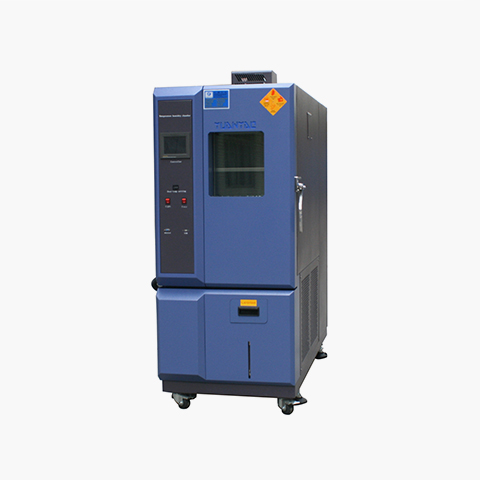
Benchtop & Reach-In Cell Level Battery Chambers
Designed for battery cell manufacturers and chemist research labs conducting accelerated aging, capacity retention, thermal abuse, and cycle life testing. Features ultra-compact footprints, high-accuracy temperature stability ($\pm 0.3^\circ\text{C}$), and isolated multi-channel pass-through ports for charge/discharge cables.
- Temperature Range: $-70^\circ\text{C}$ to $+180^\circ\text{C}$
- Ramp Rates: $3^\circ\text{C}/\text{min}$ to $15^\circ\text{C}/\text{min}$ (Rapid Rate Series)
- Humidity Control: $10\%$ to $98\%$ RH
- Cable Port Diameter: $\Phi 50\text{mm}, \Phi 100\text{mm}$, custom oval options
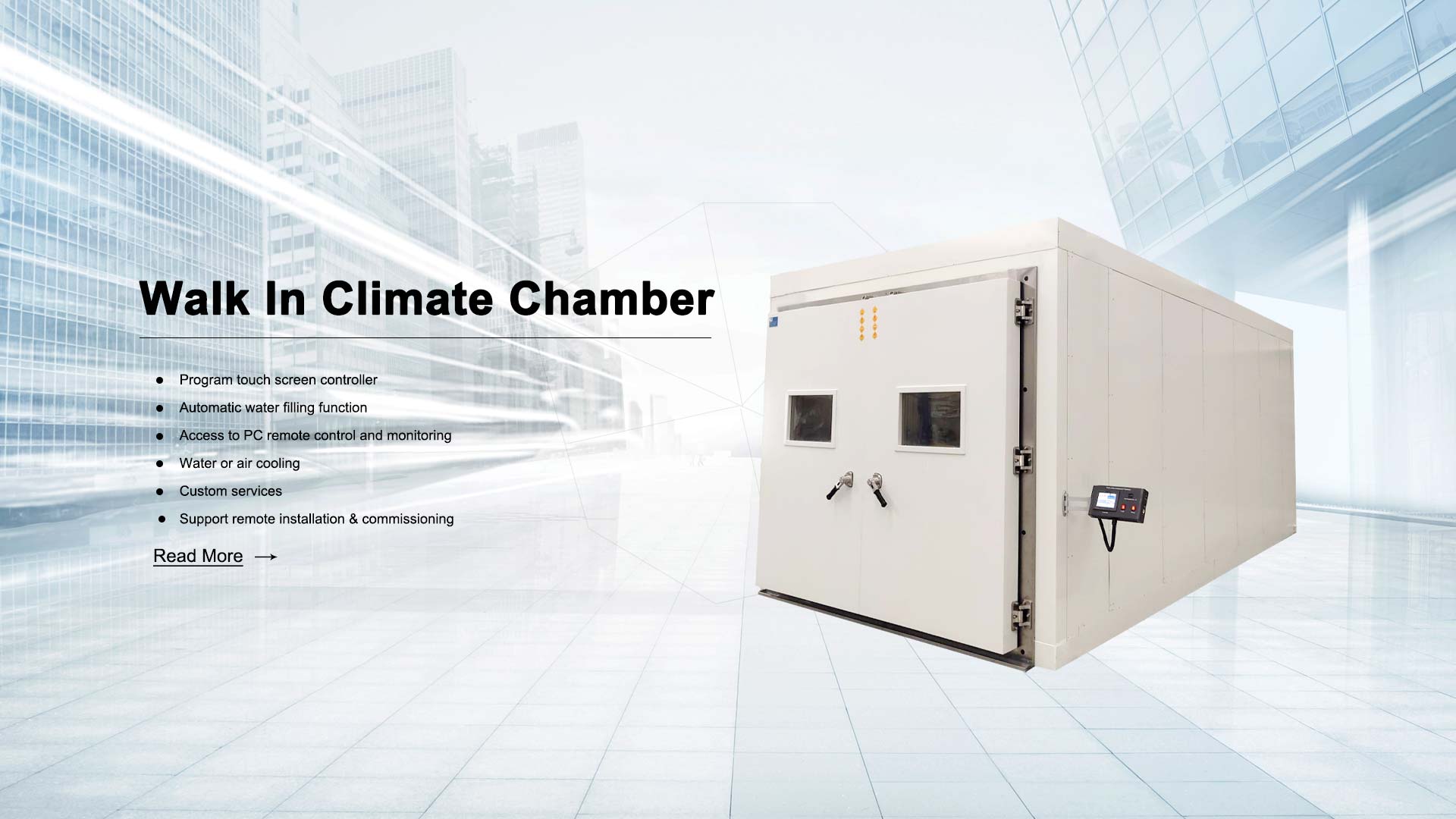
Walk-In & Drive-In Battery Pack Reliability Test Chambers
Built for complete Automotive EV battery packs, energy storage enclosures, and large powertrain modules. SFTYE Walk-In Battery Chambers incorporate heavy-duty floor load capacities up to $5,000\text{ kg/m}^2$, explosion-relief ceiling panels, integrated ducting for external smoke scrubbers, and seamless synchronization with battery cyclers (Bitrode, Chroma, Digatron, AVL).
- Internal Volume: From $8\text{ m}^3$ to over $120\text{ m}^3$ custom rooms
- Cooling Tech: Cascade refrigeration with semi-hermetic compressors (Bitzer/Bock)
- Safety Rating: EUCAR Level 5-7 explosion protection system
- Data Integration: MODBUS TCP/IP, CANbus, Ethernet automation
Combined Climate, Vibration & Electrical Battery Chambers
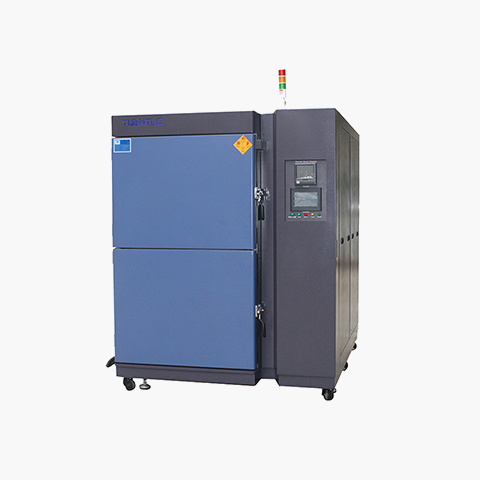
Simulating real-world vehicle operation where batteries encounter simultaneous thermal fluctuations, high humidity, and severe road vibration. SFTYE integrates temperature/humidity test chambers directly with electrodynamic vibration shakers (3-axis vertical and horizontal displacement).
- Vibration Interface: Universal motorized shaker blind flange & floor lift mechanism
- Dynamic Thermal Ramp: Rapid rate up to $20^\circ\text{C}/\text{min}$ with liquid nitrogen ($LN_2$) booster
- Standard Compliance: ISO 16750-4, UN 38.3.4.3, SAE J2464
4. Future Procurement Trends in Global Lithium Battery Reliability Testing
As the energy storage landscape matures, procurement directors across North America, Europe, and Asia-Pacific face shifting technical requirements. Staying ahead of these market forces is vital for long-term capital equipment ROI:
Trend A: Tightening Regulatory Directives & Digital Battery Passports
The enforcement of the European Union New Battery Regulation (EU 2023/1542) mandates rigorous carbon footprint declarations, supply chain transparency, and mandatory lifecycle reliability testing. Battery chambers are no longer evaluated purely on thermal range; buyers demand automated digital audit trails, precision energy consumption monitoring, and cloud-connected calibration logging to comply with global battery passport verification.
Trend B: Shift Toward Ultra-Fast Thermal Ramp Rates ($15^\circ\text{C}/\text{min} - 20^\circ\text{C}/\text{min}$)
With 800V fast-charging architectures (DC fast charging at 350kW+) becoming mainstream, batteries generate intense thermal pulses in extremely short durations. Test protocols now demand environmental test chambers capable of rapid stress testing to replicate transient thermal shocks during fast-charge cycling without overshoot.
Trend C: Integration with Smart Energy Management & Heat Recovery Systems
High-volume battery testing facilities consume massive electrical power. Modern procurement requests prioritize chambers equipped with inverter-driven compressors, green refrigerants (R449A, R573A, $CO_2$ R744), and thermal heat-recovery loops that redirect heat generated during battery cooling cycles to facility space heating or hot water lines.
Trend D: Universal Testing Platforms for Alternative Chemistries
As sodium-ion ($Na-Ion$), solid-state, and lithium-sulfur batteries transition from pilot lines to commercial production, test chambers must accommodate diverse chemical off-gassing profiles. Procurement trends favor modular chambers that allow swapping gas sensors and safety interlocks without replacing the core chamber chassis.
5. Technological Development Trends of Battery Reliability Test Equipment
The engineering team at SFTYE Equipment Co., Ltd. continues to push the boundaries of environmental test chamber technology. Key innovation vectors reshaping the industry include:
1. AI-Driven Predictive Thermal & Gas Analytics
By applying machine learning algorithms to real-time gas composition sensors, internal pressure transducers, and thermal imaging cameras inside the chamber, modern SFTYE chambers can detect thermal runaway precursors minutes before visual smoke or open flame appears. The control system dynamically triggers pre-emptive $N_2$ injection and safe discharge isolation.
2. Direct Liquid Immersion & Active Coolant Loop Integration
Modern EV battery packs rely on liquid cooling plates (glycol/water or dielectric fluids). Advanced reliability test chambers now integrate dual fluid conditioning units (Chillers/Heaters) that independently regulate internal battery liquid coolant temperatures while the chamber controls ambient air temperature, mirroring real-world vehicle cooling loop dynamics.
3. Dynamic Blast Mitigation & Active Gas Scrubbing
Next-generation walk-in battery chambers incorporate secondary burn boxes and wet chemical scrubbing stations. When toxic vent gases ($HF, CO, POF_3$) are released, the chamber automatically routes exhausted gases through neutralizer scrubbing tanks before atmospheric discharge, protecting local environment and urban facility compliance.
6. Global Buyer Procurement FAQ: Lithium Battery Reliability Test Chambers
Below are authoritative answers to the most frequent technical and procurement inquiries submitted by international engineering buyers and test laboratory directors:
A standard climate chamber is designed for inert electronics, plastics, and non-reactive materials. It lacks explosion protection. A specialized Lithium Battery Reliability Test Chamber is engineered with reinforced structural walls, pressure relief blow-out vents, spark-free heating/circulating components, flammable gas detection ($H_2, CO$), inert gas purging ($N_2$), and automatic fire suppression (Novec 1230). Testing charged lithium batteries in a standard chamber poses severe fire and explosion risks.
SFTYE battery chambers are engineered to assist clients in achieving full certification under key global standards, including:
- UN 38.3: Transport safety testing for lithium cells and batteries (Thermal test T2).
- UL 2580: Batteries for use in Electric Vehicles.
- IEC 62660-2 & IEC 62660-3: Secondary lithium-ion cells for EV propulsion safety & reliability.
- SAE J2464 / SAE J2929: Electric and Hybrid Electric Vehicle propulsion battery system safety guidelines.
- ISO 12405-4: Electrically propelled road vehicles — Test specification for lithium-ion traction battery systems.
The required EUCAR hazard protection level depends on your battery state-of-charge (SOC), energy capacity (kWh), cell chemistry, and specific test parameters (e.g., thermal abuse vs. gentle thermal cycling). If testing fully charged high-density cells (100% SOC) to failure, specify EUCAR Level 5 to 7 protection with full explosion venting and fire suppression. SFTYE engineers provide detailed risk matrix assessments during the pre-sale consultation stage.
When electrolyte solvents combust (containing $LiPF_6$), toxic Hydrofluoric Acid ($HF$) vapor is generated. SFTYE chambers utilize high-grade 316L stainless steel interior linings or specialized anti-corrosion fluorocarbon coatings. Additionally, exhaust ducting is integrated with automated extraction dampers and optional wet gas scrubbing interfaces to neutralize acid gases safely.
Yes. SFTYE controllers support open communication protocols including Modbus TCP/IP, Ethernet/IP, CANbus, and RS485. Our software integrates seamlessly with industry-standard charge/discharge cyclers and lab automation software (such as LabVIEW, AVL Lynx, Chroma, and Digatron), allowing synchronized temperature control and battery cycling data collection.
We provide completely bespoke room sizing ranging from $1\text{ m}^3$ reach-in cabinets to over $100\text{ m}^3$ walk-in drive-in rooms. Floors can be structurally reinforced with heavy-duty structural steel I-beams capable of supporting point loads up to 5,000 kg, allowing heavy battery packs and vehicle chassis to be driven or rolled directly into the test zone on guided carts.
Standard reach-in battery chambers are typically delivered within 4 to 6 weeks, while custom walk-in explosion-proof chambers require 8 to 12 weeks depending on technical complexity. All SFTYE equipment includes a comprehensive 14 to 24 month warranty, lifetime technical support, local on-site commissioning options, and rapid spare parts dispatch worldwide.
7. Why Global Industry Leaders Choose SFTYE Equipment Co., Ltd.
Founded in 2009, SFTYE Equipment Co., Ltd. has established itself as an authoritative global manufacturer of high-precision environmental test chambers and reliability testing solutions. Our engineering legacy is built on relentless technical innovation, uncompromising safety compliance, and customer-centric service execution.

Enterprise Highlights & Track Record
- 15+ Years of Industry Excellence: Over a decade and a half dedicated strictly to thermal, mechanical, climate, and safety test equipment R&D.
- 80+ Countries & Regions Served: Trusted by top-tier automotive OEMs, tier-1 battery cell manufacturers, aerospace institutes, and semiconductor labs across Europe, the Americas, Middle East, and Asia.
- 500+ Standard & Custom Product Models: A complete equipment ecosystem spanning climate chambers, thermal shock, explosion-proof battery test chambers, precision ovens, salt spray, IP dust/water, and mechanical vibration systems.
- 10,000+ Units Delivered Worldwide: Proven field reliability with thousands of chambers operating continuously in mission-critical quality control laboratories.
- International Quality & Safety Compliance: Operating under ISO 9001 certified quality management systems, with full CE mark and RoHS compliance across all product series.