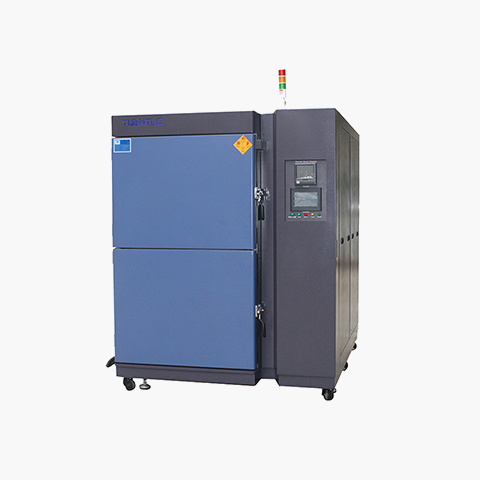
SFTYE Air-to-Air 3-Zone Thermal Shock Chamber (STS-3A Series)
- Temp Range: -75°C to +200°C
- Basket Transfer Time: < 10 seconds
- Temp Recovery Time: < 5 minutes
- JESD22-A104 & MIL-STD-883 Compliant
- Dry Nitrogen Purge to prevent dew/frost

In contemporary microelectronics manufacturing, semiconductor packaging has evolved from traditional Wire-Bond Quad Flat Packages (QFP) to advanced heterogeneous architectures—such as Chiplets, High Bandwidth Memory (HBM3e/HBM4), CoWoS (Chip-on-Wafer-on-Substrate), and Flip-Chip Ball Grid Arrays (FCBGA). As power densities surge and die sizes expand, thermal management becomes the dominant factor determining component life expectancy.
A Semiconductor Thermal Shock Chamber is designed to induce extreme, near-instantaneous temperature differentials ($\Delta T > 150^\circ\text{C}$) to expose structural vulnerabilities caused by Coefficient of Thermal Expansion (CTE) mismatch between silicon dies ($\text{CTE} \approx 2.6 \times 10^{-6}/\text{K}$), organic substrates ($\text{CTE} \approx 12\text{--}17 \times 10^{-6}/\text{K}$), SAC305 solder spheres, and epoxy underfills.
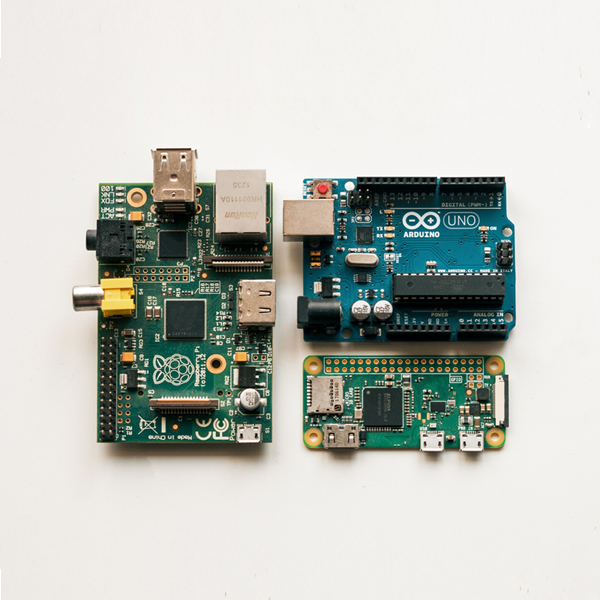
While standard temperature cycling chambers ramp temperatures gradually at 5°C/min to 15°C/min (primarily evaluating slow creep deformation), a Semiconductor Thermal Shock Chamber transfers samples between hot and cold zones in under 10 seconds, achieving heating/cooling rates exceeding 30°C/sec. This immediate thermal shock forces severe transient thermal gradients across micro-bumps and TSVs (Through-Silicon Vias), revealing micro-cracks, layer delamination, and copper pillar joint shearing that gradual thermal cycling fails to trigger within reasonable testing timeframes.
Global procurement engineers must carefully select between Air-to-Air (2-Zone or 3-Zone pneumatic basket) and Liquid-to-Liquid thermal shock methods based on component geometry, power dissipation, and target qualification standards (JESD22-A104 vs. MIL-STD-883 Method 1011).
| Engineering Feature | 2-Zone Air-to-Air Thermal Shock | 3-Zone Air-to-Air Thermal Shock | Liquid-to-Liquid Thermal Shock |
|---|---|---|---|
| Heat Transfer Medium | Forced Air Convection | Forced Air Convection | Inert Fluorinated Liquid (Fluorinert/Galden) |
| Sample Transfer Time | < 10 seconds (Pneumatic Lift) | Stationary Basket (Dampers Shift) | < 5 seconds (Liquid Submersion) |
| Heat Transfer Coefficient (h) | ~50 to 100 W/(m²·K) | ~50 to 100 W/(m²·K) | ~500 to 1000 W/(m²·K) (10x faster) |
| Temperature Range | -75°C to +200°C | -75°C to +200°C (includes Ambient) | -65°C to +150°C |
| Primary Application Standard | JESD22-A104, IPC-TM-650 | JESD22-A104, MIL-STD-202 | MIL-STD-883 Method 1011.9 Condition C |
| Best Suited For | BGA, QFN, Wafer-level Packaging | Components requiring room temp soak | Hermetic ICs, Military/Aerospace Chips |
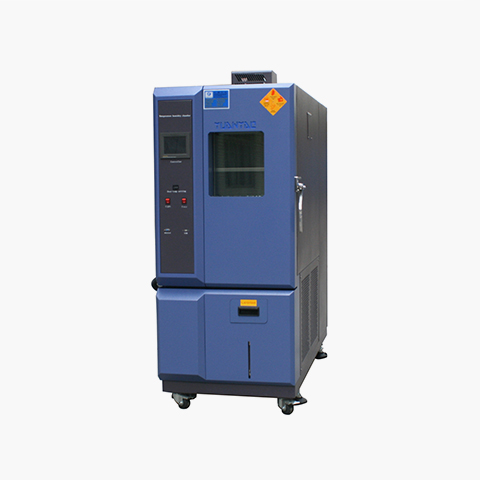
Engineered with high-recovery refrigeration systems, zero-condensation N2 purging, and precise PLC touchscreen control.
How global semiconductor test labs, OSAT providers, and fabless chip designers are adapting their thermal reliability testing strategies.
Next-generation GPUs and AI ASICs consume between 400W to 1000W per package. Traditional passive thermal shock chambers cannot dissipate live heat during powered burn-in thermal shock. SFTYE is pioneering high-capacity auxiliary heat load compensation systems capable of maintaining strict temperature recovery even when testing high-TDP active dies under biased thermal stress.
Electric Vehicle (EV) traction inverters and 800V powertrain architectures require Silicon Carbide (SiC) and Gallium Nitride (GaN) power switches to survive mission-critical thermal shocks from -55°C to +175°C. SFTYE chambers integrate high-insulation power feedthrough ports to permit in-situ electrical bias measurement during thermal shock cycles.
With stringent EU F-Gas regulations and global environmental policies phasing out high-GWP refrigerants like R-404A and R-23, procurement managers prioritize eco-friendly testing equipment. SFTYE's new generation of semiconductor chambers utilizes low-GWP eco-refrigerants (R-449A / R-469A) paired with variable-frequency inverter compressors, reducing power consumption by up to 35%.
Modern semiconductor fabrication facilities (Fabs) and OSAT packaging plants demand fully automated equipment interfaces. SFTYE Semiconductor Thermal Shock Chambers feature native SECS/GEM protocol integration, enabling central manufacturing execution systems (MES) to monitor temperature profiles, transfer speeds, and fault alarms in real-time.
Exposing microelectronic devices to rapid thermal transitions triggers severe thermo-mechanical stresses at material interfaces. Reliability engineers utilize SFTYE Semiconductor Thermal Shock Chambers to uncover microscopic structural defects prior to mass production:
Expert engineering answers to intent-driven technical questions asked by procurement directors and quality assurance managers.
Founded in 2009 in Dongguan, China, SFTYE Equipment Co., Ltd. has established itself as an authoritative global manufacturer of high-reliability environmental test chambers. Our engineering team combines over 15 years of thermodynamics experience, delivering precision-built test equipment to semiconductor fabs, automotive tier-1 suppliers, and aerospace research centers across more than 80 countries.
Specialized R&D in Precision Thermal Engineering
Strict International Quality Control Standards
Global Delivery & Technical Service Presence
Tailored Mechanical & Electrical Architecture