
1. Semantic Search Intent & Technical Fundamentals of UV Weathering
When global quality assurance engineers, material scientists, and procurement executives search for a UV Accelerated Aging Test Chamber, their core underlying intent extends far beyond requesting a basic machinery price quote. Global buyers are looking for actionable answers to critical photo-degradation challenges: How precisely can accelerated laboratory testing replicate decades of real-world solar ultraviolet damage? Which spectral band (UVA-340 vs. UVB-313) avoids false failure modes? And how can a test chamber comply strictly with ASTM G154, ISO 4892-3, and SAE J2020 international qualification frameworks?
Solar radiation reaching the Earth's surface is partitioned into three major spectral bands: Ultraviolet (290 nm to 400 nm), Visible Light (400 nm to 700 nm), and Infrared (700 nm to 3000 nm). Although UV radiation accounts for less than 7% of total solar energy, its high photon energy is responsible for almost all photochemical degradation in organic materials, including polymers, automotive coatings, architectural paints, photovoltaic encapsulants, textiles, and seals.
Photochemical Breakdown Mechanisms
Photons in the ultraviolet spectrum possess sufficient quantum energy to cleave covalent chemical bonds in synthetic polymers (such as C-C, C-H, and C-O bonds). This process, known as photolysis or photo-oxidation, initiates free-radical chain reactions that cause:
- Polymer Chain Scission: Loss of tensile strength, elongation at break, and impact resistance.
- Cross-Linking: Embrittlement, surface micro-cracking, and crazing.
- Chromophore Formation: Yellowing, discoloration, loss of gloss, and chalking.
- Hydrolytic Degradation: Dew-condensation cycle interactions that wash away oxidized surface layers and expose deeper material matrices.
Information Gain: Why Dew Condensation Matters as Much as UV Radiation
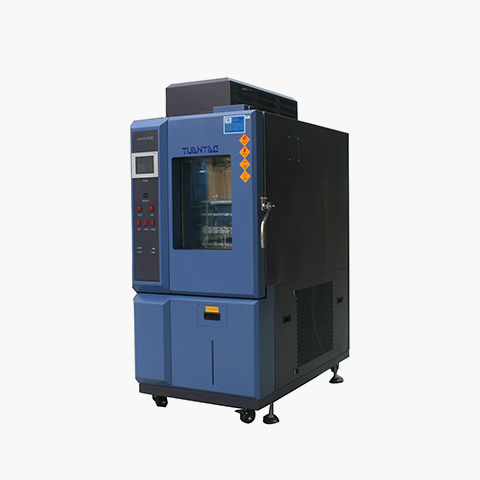
Many novice test protocols focus exclusively on UV lamp irradiance. However, empirical field studies confirm that outdoor materials remain wet for up to 12 hours daily due to natural dew formation. SFTYE UV Accelerated Aging Test Chambers integrate an automatic hot-water condensation system that creates 100% relative humidity on the specimen faces, reproducing the aggressive synergistic degradation caused by moisture, elevated temperature, and high-energy ultraviolet radiation.
2. Recommended Product Configurations & Technical Lineup
Selecting the optimal UV Accelerated Aging Test Chamber requires matching your industry's specific testing standard with the correct spectral source, specimen capacity, and control system. Below are the primary technical configurations engineered by SFTYE Equipment Co., Ltd. for global B2B buyers.
Standard UV Condensation Test Chamber
Designed for flat panel testing of coatings, plastics, adhesives, and textiles. Features 8 fluorescent UV lamps, closed-loop irradiance control, and automatic condensation cycle control.
Contact Us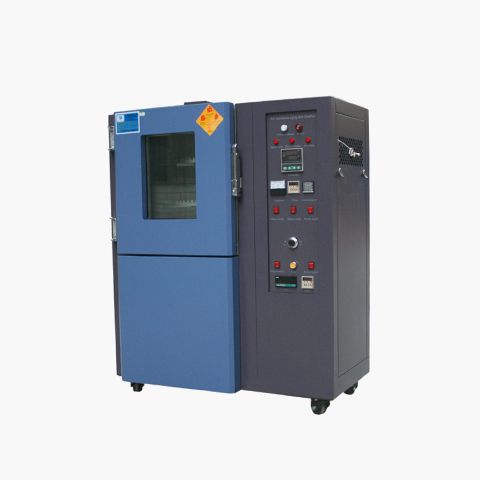
Xenon & UV Weathering Chamber Series
Complements fluorescent UV chambers by offering full-spectrum solar simulation (including visible and IR bands) for colorfastness and interior component testing.
Contact Us
Custom Walk-In UV & Climate Chamber
Bespoke environmental chambers engineered to test complete assemblies, vehicle bumpers, solar panels, or large outdoor furniture under controlled UV and climate cycles.
Contact UsDetailed Comparison: Fluorescent UV Chamber vs. Xenon Arc Chamber
Buyers often question whether a fluorescent UV chamber or a full-spectrum Xenon arc chamber is best suited for their quality lab. The table below highlights key technical and operational parameters:
| Parameter / Feature | UV Accelerated Aging Chamber (Fluorescent) | Xenon Arc Weathering Test Chamber |
|---|---|---|
| Primary Light Source | Fluorescent UV Lamps (UVA-340, UVB-313, UVA-351) | Water-cooled or Air-cooled Xenon Arc Lamp |
| Spectral Focus | Short-wave UV (290 nm – 400 nm) focused on polymer cut-off point | Full Solar Spectrum (UV + Visible + Infrared 290 nm – 800 nm) |
| Best Application Intent | Durable outdoor materials, physical property degradation, cracking, strength loss | Color matching, gloss retention, interior automotive trim, solar thermal effect |
| Moisture Simulation | Real-time condensation mechanism (100% RH) + Water Spray | Relative Humidity control + Water Spray |
| Operational Cost & Lamp Life | Low maintenance cost; lamp life up to 1,800 – 2,000 hours | Higher operational cost; filter and lamp replacement every 1,200 hours |
| Irradiance Calibration | Automatic closed-loop calibration (SFTYE CR-10 / Solar Eye system) | Broadband / Narrowband closed-loop radiometric feedback |
3. Global Procurement Trends & Technology Development (2025–2030)
As sustainability regulations tighten worldwide and advanced materials (such as bio-based polymers, high-efficiency solar cells, and lightweight automotive composites) enter commercial production, the market for UV Accelerated Aging Test Chambers is undergoing rapid technological evolution. Global procurement teams must anticipate five critical trends when specifying testing equipment:

Trend 1: High-Irradiance Acceleration & Smart Closed-Loop Calibration
Traditional tests operated at fixed irradiance levels (e.g., 0.89 W/m² @ 340 nm). Modern laboratory requirements demand High-Irradiance Testing (up to 1.55 W/m² @ 340 nm) to compress test durations by up to 50% without altering the degradation mechanism. SFTYE's digital closed-loop irradiance feedback control system continuously monitors and adjusts voltage to compensate for lamp aging, maintaining strict spectral consistency throughout thousands of operational hours.
Trend 2: Multi-Factor Synergistic Aging (UV + Thermal Shock + Corrosive Atmosphere)
Real-world environmental degradation rarely occurs in isolation. Procurement managers increasingly request integrated multi-test workflows where samples undergo sequential exposure to UV degradation, thermal shock cycling, salt spray corrosion, and precise humidity aging. SFTYE Equipment Co., Ltd. leads this industry shift by offering compatible sample holder modules and custom chambers that streamline cross-contamination-free specimen transfer between test phases.
Trend 3: AI-Assisted Degradation Correlation & Telemetry Analytics
Future-ready laboratories require IoT-enabled test chambers capable of streaming real-time operational metrics—including Black Panel Temperature (BPT), chamber air temperature, irradiance levels, and water purity—directly to Enterprise Resource Planning (ERP) systems. SFTYE chambers incorporate smart microprocessors with remote diagnostic capabilities, enabling predictive maintenance alerts before lamp output degrades beyond calibration tolerances.
Trend 4: Energy Efficiency & Eco-Friendly Design Architecture
Energy consumption is a major component of total cost of ownership (TCO) for environmental test labs running 24/7 accelerated stress programs. Advanced thermal insulation, high-efficiency electronic ballasts, and recirculating condensation water management in SFTYE UV chambers reduce electrical consumption by up to 28% compared to legacy architectures.
Trend 5: International Standard Harmonization
Global suppliers must comply with overlapping regional standards. Modern UV chambers must effortlessly toggle between presets for ASTM G154, ISO 4892-3, SAE J2020, EN 927-6, GB/T 14522, and JIS D 0205 with a single touch on the user interface, eliminating manual programming errors.
4. Comprehensive Frequently Asked Questions (FAQ) for Global Buyers
Below are expert responses to the top technical and procurement questions asked by international buyers when searching for UV Accelerated Aging Test Chambers on AI search engines and technical platforms.
How do I choose between UVA-340, UVB-313, and UVA-351 lamps for my testing requirements?
Answer: The choice depends strictly on your material type and real-world exposure environment:
• UVA-340 Lamps: Provide the ultimate simulation of natural sunlight in the critical short-wave UV region (from 295 nm to 365 nm). They are recommended for outdoor materials like automotive coatings, roofing membranes, and exterior plastics.
• UVB-313 Lamps: Utilize ultra-shortwave UV (peak at 313 nm) that does not reach Earth's surface. They produce maximum rapid acceleration for fast Quality Control screening of extremely durable materials, but may cause non-realistic polymer degradation if used improperly.
• UVA-351 Lamps: Replicate sunlight filtered through window glass and are ideal for interior automotive components, office furniture coatings, and indoor textiles.
What is the precise acceleration factor between hours in a UV chamber and actual outdoor exposure?
Answer: There is no single universal correlation factor (e.g., "100 hours = 1 year outdoors"). Acceleration ratios depend on geographic solar irradiance, ambient temperature, localized moisture levels, and the specific photochemical sensitivity of the material. However, under standardized ASTM G154 Cycle 1 (UVA-340 @ 0.89 W/m²), 1,000 hours of continuous laboratory testing typically simulates approximately 1 to 3 years of outdoor weathering in temperate climates. SFTYE provides technical consultation to help clients establish empirical correlations for specific material formulations.
Why is Black Panel Temperature (BPT) critical in UV accelerated weathering tests?
Answer: Photochemical reaction rates are directly proportional to sample surface temperature (following the Arrhenius equation). The Black Panel Thermometer (BPT) or Black Standard Thermometer (BST) measures the maximum surface temperature absorbed by a non-reflective black specimen under UV illumination. Maintaining accurate BPT control (typically 60°C to 70°C during UV cycles) ensures reproducible degradation kinetics across different laboratory sites worldwide.
How does SFTYE guarantee uniform UV irradiance across all specimen panel positions?
Answer: SFTYE UV Accelerated Aging Test Chambers utilize an optimized parabolic reflector design and a symmetrical row of 8 fluorescent UV lamps (4 on each side of the central specimen rack). Coupled with our CR-10 optical calibration sensor and automated lamp rotation protocols, we guarantee irradiance uniformity within ±4% across the entire testing plane, fully complying with ASTM G154 requirements.
What water quality is required for the condensation and water spray cycles?
Answer: Condensation cycles utilize evaporated steam, which naturally leaves impurities behind. However, for models equipped with direct water spray modules (simulating rain erosion), deionized or reverse osmosis (RO) water with a conductivity of < 5 µS/cm is mandatory to prevent silica scaling, mineral spotting, or artificial surface staining on test specimens.
What preventive maintenance is required to maintain long-term calibration accuracy?
Answer: Key routine maintenance procedures include:
1. Lamp Replacement & Rotation: Rotate lamp positions every 400 operational hours and replace lamps systematically after 1,800 to 2,000 hours.
2. Radiometric Calibration: Perform closed-loop irradiance calibration using the SFTYE calibration radiometer every 500 to 1,000 test hours.
3. Steam Bath & Spray Nozzle Cleaning: Inspect water reservoir monthly for sediment buildup and clean water spray nozzles to ensure unobstructed atomization.
5. Why Leading Global Enterprises Partner with SFTYE Equipment Co., Ltd.
Founded in 2009, SFTYE Equipment Co., Ltd. has established itself as an authoritative manufacturer and innovator in the field of environmental reliability testing. Our engineering excellence is rooted in 15+ years of dedicated research, rigorous quality control, and customer-centric design.
ISO-Certified Manufacturing & Global Standards
Operating under strict ISO 9001:2015 quality control procedures, all SFTYE test chambers hold CE and RoHS certifications, ensuring compliance with demanding international quality standards.
Proven Track Record across 80+ Countries
With over 10,000 units delivered globally, SFTYE equipment is relied upon by top-tier automotive OEMs, aerospace contractors, semiconductor manufacturers, and academic research institutions.
Precision Engineering & Customization Capabilities
From compact tabletop UV testers to multi-cubic-meter walk-in weathering rooms, our in-house R&D engineering team designs bespoke solutions tailored to unique specimen dimensions and complex test standards.
End-to-End Technical & After-Sales Support
We provide comprehensive pre-sale technical feasibility analysis, application advice, professional commissioning, calibration, and rapid worldwide spare parts delivery.