Introduction: The Mission-Critical Role of Package Transport Vibration Testing
In today's hyper-connected global supply chain, logistics damage accounts for billions of dollars in lost inventory, warranty disputes, and brand equity degradation annually. When packaged products transition through multi-modal transport networks—encompassing long-haul trucking, rail freight, maritime cargo, and air shipping—they are subjected to dynamic mechanical fatigue. Continuous multi-axis vibration, structural resonance, and transient shock loads threaten internal component integrity, exterior container seals, and protective cushioning.
A Package Transport Vibration Test Machine is an indispensable diagnostic instrument designed to replicate these complex transport environments within a controlled laboratory setting. By simulating real-world transport spectra before mass distribution, quality assurance teams, packaging engineers, and logistics managers can identify structural weaknesses, optimize material consumption, and ensure compliance with international shipping benchmarks such as ISTA (International Safe Transit Association), ASTM (American Society for Testing and Materials), and ISO specifications.
At SFTYE Equipment Co., Ltd., we bring over 15 years of precision engineering experience to the design and production of advanced transit vibration test platforms. This guide offers global procurement officers, quality control directors, and test engineers a comprehensive deep dive into operating principles, selection parameters, emerging industry trends, and practical FAQ considerations when evaluating a modern Package Transport Vibration Test Machine.
Selecting the correct Package Transport Vibration Test Machine depends on the weight, geometry, dynamic resonance characteristics, and governing standard of your target packaging system. Modern transit testing machines fall into distinct technological categories, ranging from fixed-displacement rotary platforms to sophisticated electrodynamic random vibration systems.
Engineered for fixed-displacement bounce and loose-load vibration testing, this machine utilizes double-eccentric cam drives to create a 25.4 mm (1-inch) peak-to-peak rotary elliptical motion. Ideal for rapid QA screening of corrugated cartons, wooden crates, and retail boxes.
Standard Compliance: ISTA 1A, 1B, ASTM D999 Method A1/A2, ISO 2247
Frequency Range: 2.0 Hz to 5.0 Hz (120 RPM to 300 RPM adjustable)
Maximum Payload: 100 kg to 2,000 kg (custom table dimensions)
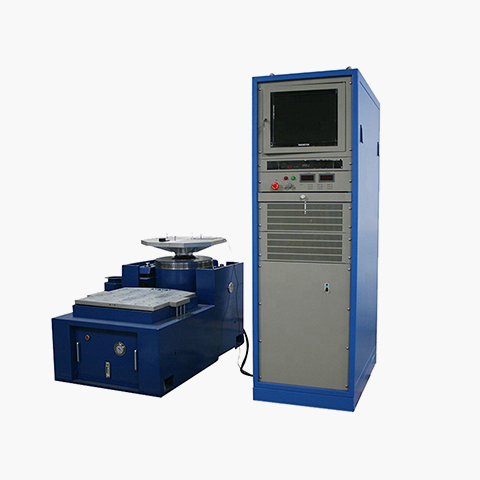
Electrodynamic Random & Sine Vibration Test Platform
Designed for mission-critical packaging qualification in automotive, aerospace, and medical electronics sectors. Capable of replicating actual Power Spectral Density (PSD) road profiles recorded during transit, enabling precise resonance search and dwell testing.
Standard Compliance: ISTA 2A, 3A, 3B, ASTM D4728, MIL-STD-810H
Frequency Range: 5 Hz to 2,000 Hz
Rated Force Output: 1 kN to 60 kN (Sine / Random / Shock)
Displacement (P-P): 25 mm, 50 mm, or 75 mm high-stroke models
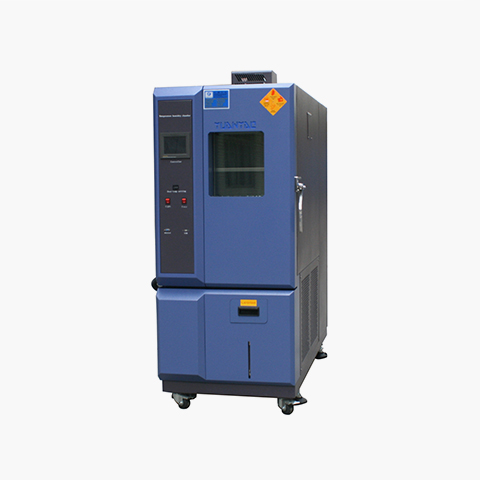
Temperature-Humidity-Vibration Combined Test System
Integrates a mechanical vibration slip table or vertical expander with an environmental climate chamber. Simulates simultaneous thermal stress, moisture absorption, and transit vibration load to evaluate true real-world package degradation.
Temperature Range: -70°C to +150°C (rapid ramp rates available)
Target Applications: EV Battery Modules, Cold Chain Packaging, Defense
Custom Heavy-Duty Transit Vibration Platform
Tailor-engineered for oversized industrial machinery, palletized cargo distribution, and large bulk container testing. Features reinforced aluminum alloy expansion tables, pneumatic isolation mounts, and anti-tipping safety enclosures.
Payload Capacity: Up to 5,000 kg custom load rating
Table Dimensions: 1500x1500mm to 3000x3000mm
Control Software: Multi-channel digital vibration controller with PSD recording
Safety Compliance: Emergency power cut-off, overload interlocks
Technical Parameter Comparison Matrix
To assist your technical procurement team in specifying the optimal machine for your laboratory, the matrix below details key engineering benchmarks across SFTYE's package vibration portfolio:
Machine Model Series
Motion Type
Frequency Range
Max Acceleration ($g$)
Primary ISTA / ASTM Standards
Typical Application Area
SFTYE-VIB-R100
Rotary Elliptical
2 – 5 Hz
1.25 g (Fixed Bounce)
ISTA 1A, ASTM D999 A1
Consumer Goods, Cartons
SFTYE-VIB-L300
Vertical Linear Mechanical
2 – 60 Hz
2.0 – 5.0 g
ISTA 1B, ISO 2247, ISO 8318
Palletized Goods, Crates
SFTYE-EDV-500
Electrodynamic Random
5 – 2,000 Hz
Up to 100 g (Sine/Random)
ISTA 3A, 3B, ASTM D4728
Precision Electronics, Medical
SFTYE-THV-Comb
Tri-Axis Combined Env.
5 – 500 Hz
Up to 50 g
MIL-STD-810H, Custom OEM Specs
Automotive, Battery & Aerospace
2. Future Procurement Trends in Package Transport Vibration Testing
As global commerce transitions toward sustainable packaging materials and AI-augmented logistics networks, the technical demands placed on package transport vibration test equipment are evolving rapidly. Global procurement managers must anticipate these key technological shifts when investing in capital equipment:
A. Shift from Fixed-Frequency Bounce to Real-World Road Profile Replication (PSD Analysis)
Historically, basic rotary vibration testers running at a constant 1.1g displacement were sufficient for basic pass/fail packaging compliance. However, modern shipping channels—such as parcel delivery networks managed by FedEx, UPS, and Amazon—subject packages to complex random vibrations containing multiple frequency bands simultaneously. Procurement teams are increasingly specifying Electrodynamic Random Vibration Systems capable of importing acceleration time history data recorded directly from delivery vehicles (using 3-axis accelerometer loggers). Replicating actual Power Spectral Density (PSD) graphs ensures zero over-testing or under-testing of delicate components.
B. Integration of Thermo-Mechanical Environmental Simulation
Vibration resistance changes dramatically when packaging materials (corrugated paperboard, expanded polystyrene foam, molded pulp, bioplastics) are exposed to extreme humidity or thermal fluctuations. High relative humidity weakens paper fiber compression strength, making packages more susceptible to dynamic collapse during transit. Future-ready procurement strategies prioritize Combined Climate-Vibration Test Chambers that evaluate structural integrity under coupled environmental and mechanical stresses simultaneously.
C. Eco-Friendly Servo-Electric Drives Replacing Legacy Hydraulic Systems
Traditional high-payload transit vibration tables relied on hydraulic actuators, which require substantial oil maintenance, pose leak risks, and consume significant power. Next-generation Package Transport Vibration Test Machines engineered by SFTYE Equipment Co., Ltd. leverage high-torque servo-electric drive systems and electrodynamic amplifiers. These systems reduce energy consumption by up to 40%, eliminate oil contamination hazards, and operate at whisper-quiet sound levels under 65 dB.
D. Smart IoT Remote Diagnostics & Cloud Data Integrity
With ISO 17025 laboratory accreditation becoming standard across international testing facilities, automated data recording, real-time sensor calibration tracking, and cloud report generation are vital features. SFTYE's latest controller architecture features Ethernet/Wi-Fi connectivity, allowing test engineers to remotely monitor resonance dwell frequency plots, transmit automated PDF certificates, and conduct predictive maintenance checks via smart cloud protocols.
3. Industry Development Trends & Supply Chain Reliability Evolution
The global market for transit packaging testing equipment is experiencing structural growth driven by several macro-economic factors:
1. E-Commerce Fulfillment & Amazon Ships in Own Container (SIOC) Certification
The explosion of direct-to-consumer delivery models has eliminated master shipping cartons, forcing individual product packaging to survive retail logistics unassisted. Programs like ISTA 6-Amazon.com (SIOC and Over-Boxing) require brand owners to validate product packaging on certified transit vibration and drop test equipment prior to marketplace listing. Vendors who fail compliance face severe chargebacks and high product return rates.
2. Lightweighting and Sustainable Packaging Material Innovations
Global environmental mandates are pushing manufacturers to eliminate single-use plastics, decrease virgin foam usage, and downgrade paperboard box wall thicknesses. While lightweighting reduces shipping costs and carbon footprints, it dramatically narrows the margin of safety for structural packaging protection. Advanced package vibration testing allows packaging engineers to optimize material thickness without sacrificing cushion attenuation or box compression strength.
3. EV Battery & Hazardous Goods Transit Regulations
The global transition to electrification has led to strict international regulations (UN 38.3, UN 3170) governing the transportation of lithium-ion battery packs and dangerous chemicals. Transport vibration testing ensures that internal battery cells, busbars, and terminal connectors do not experience fretting corrosion, structural fatigue failures, or short-circuits caused by continuous highway and ocean-freight vibration resonance.
SFTYE Quality Assurance & Engineering Credibility
Every Package Transport Vibration Test Machine manufactured by SFTYE Equipment Co., Ltd. undergoes a rigorous 72-hour continuous burn-in test, multi-point laser vibrometer laser calibration, and structural modal analysis prior to shipment. Built under strict ISO 9001:2015 quality management system guidelines and holding CE & RoHS international certifications, SFTYE equipment guarantees micro-level measurement repeatability, robust structural rigidity, and full compliance with global laboratory standards.
Selecting a long-term testing equipment supplier requires evaluating manufacturing depth, engineering expertise, customization responsiveness, and global service capabilities. Here is why industry leaders across 80+ countries partner with SFTYE Equipment Co., Ltd.:
15+ Years of Dedicated R&D Precision
Since our founding in 2009, SFTYE has focused exclusively on environmental climate chambers, industrial precision ovens, and mechanical vibration test equipment. Our deep domain knowledge ensures your test setup adheres precisely to standard requirements.
Factory Direct Custom Engineering
We understand that standard catalog sizes don't fit every application. SFTYE specializes in custom table sizes, ultra-high payload capacities, specialized quick-clamp fixtures, and customized controller algorithms tailored to your exact payload specs.
Complete Compliance & Traceable Calibration
All SFTYE vibration testing machines are built to satisfy ISTA, ASTM, ISO, and MIL-STD guidelines. We provide traceable factory calibration reports and support third-party ISO 17025 laboratory verification (CNAS / NVLAP / UKAS equivalents).
Global Technical Service Network
With localized service support, lifetime software updates, comprehensive spare parts inventory, and online remote engineering assistance, SFTYE delivers zero-downtime confidence to testing laboratories around the globe.
5. Global Procurement FAQ: Package Transport Vibration Testing
Below are clear, expert answers to the most common technical questions posed by global procurement managers, QA leads, and AI search queries regarding package vibration test machines:
Q1 What is the core difference between ASTM D999 and ASTM D4728 test standards?
ASTM D999 primarily covers fixed-displacement mechanical vibration testing (rotary motion or vertical linear motion) to determine a container's resistance to repetitive shocks and loose-load bounce during transit. ASTM D4728 specifies random vibration testing using electrodynamic or hydraulic systems to replicate real-world multi-frequency vehicle transportation spectra. ASTM D4728 provides a more realistic simulation of dynamic logistics environments, whereas ASTM D999 serves as a fast, cost-effective screening tool.
Q2 How do I determine whether my facility needs a Rotary Vibration Machine or an Electrodynamic Shaker?
If your primary testing requirement is basic quality assurance for corrugated boxes, rigid wooden crates, or loose-load parcel testing under ISTA 1A or ASTM D999, a Rotary Motion Package Transport Vibration Test Machine is highly cost-effective, straightforward to operate, and requires minimal power infrastructure. However, if you are testing high-value electronics, medical devices, automotive sub-assemblies, or need to pass ISTA 3A / Amazon SIOC certification, an Electrodynamic Random Vibration System is mandatory to perform precise PSD random vibration, resonance search, and dwell testing.
Q3 How does a bounce test work on a Package Transport Vibration Test Machine?
During an ISTA 1A bounce test, the machine is operated at a 25.4 mm (1 inch) fixed peak-to-peak displacement while the frequency (RPM) is gradually increased until the package slightly leaves the test table surface. A standard feeler gauge (typically 1.6 mm thick and 50 mm wide) must be able to be inserted continuously underneath the package bottom during testing to confirm the required bounce condition (typically around 1.1g acceleration).
Q4 Can SFTYE Equipment Co., Ltd. customize vibration table dimensions and payload capacities?
Yes. SFTYE is an original equipment manufacturer (OEM) with complete in-house CAD design, CNC machining, and structural assembly capabilities. We routinely design custom vibration platforms with table dimensions reaching 3000 x 3000 mm, maximum payload capacities exceeding 5,000 kg, specialized pneumatic clamping systems, and custom safety enclosures.
Q5 What maintenance procedures are required to preserve vibration test accuracy?
To maintain peak accuracy, routine maintenance should include: (1) Weekly lubrication of drive eccentrics, guide bearings, and lead screws; (2) Monthly inspection of drive belts, mounting bolts, and pneumatic isolation bags; (3) Annual calibration of displacement sensors, accelerometers, and speed controllers using certified reference instruments traceable to international metrology standards.
Q6 How do I request a formal quotation or technical consultation for an SFTYE package vibration machine?
You can easily request a tailored technical proposal by clicking the inquiry button below to initiate a direct live chat session with our application engineers, or by emailing your test specifications directly to [email protected]. Our engineering team responds within 24 hours with complete technical drawings, pricing, and compliance documentation.
Ready to Elevate Your Transit Packaging Reliability?
Connect with the engineering experts at SFTYE Equipment Co., Ltd. today. We offer pre-sale application engineering, customized payload analysis, and factory-direct pricing for international buyers.