
1. Executive Technical Overview: What is a Hydraulic Vertical Impact Test Table?
A Hydraulic Vertical Impact Test Table (also termed a hydraulic vertical shock test system) is a heavy-duty mechanical testing machine engineered to evaluate structural integrity, mechanical resilience, and transient shock resistance of large-scale payloads under extreme vertical deceleration impulses. Unlike lightweight pneumatic shock machines or electromagnetic vibration tables, hydraulic vertical impact test tables leverage controlled hydraulic pressure, energy-storing accumulators, and high-rigidity guide columns to drop, accelerate, and brake payloads weighing from hundreds of kilograms to multiple metric tons.
During real-world transport, operation, or accidental drops—such as an Electric Vehicle (EV) battery pack hitting a major road obstacle, an avionics bay undergoing launch-stage stage separation shock, or defense electronics enduring artillery recoil—structures experience severe transient energy pulses. The Hydraulic Vertical Impact Test Table replicates these extreme mechanical environments by executing precisely calibrated velocity changes ($\Delta v$), pulse durations ($\tau$), and peak accelerations ($g$).
Information Gain Insight: The Physics of Hydraulic Impact Control
Mechanical impact intensity is not merely defined by drop height ($h$). In hydraulic vertical shock systems, velocity change is dictated by $\Delta v = \int_{0}^{\tau} a(t) \, dt$. When testing high-mass specimens (such as 1,500 kg battery enclosures), free-fall kinetic energy is insufficient to achieve high peak acceleration (e.g., 100g to 500g) within narrow pulse widths (e.g., 6ms to 11ms). Hydraulic impact tables utilize hydraulic high-pressure boosters to active-accelerate the table table down onto precise waveform generators (elastomer pads, lead programming pins, or hydraulic brake cushions), delivering guaranteed pulse repeatability without structural distortion.
Core International Testing Compliance Standards
Engineering departments and international testing laboratories mandate strict adherence to global test standards. The Hydraulic Vertical Impact Test Table developed by SFTYE Equipment Co., Ltd. is fully compliant with:
- UN 38.3 (Section 38.3.4.4 - Test T4: Shock): Critical for lithium-ion battery cells, modules, and large vehicle battery packs. Mandates half-sine shock pulses of 150g / 6ms for small cells and 50g / 11ms for heavy battery systems over 12 kg.
- MIL-STD-810G / MIL-STD-810H (Method 516.6/516.7): Covers functional shock, drop, shock response spectrum (SRS), and transit drop requirements for defense electronics and aerospace components.
- IEC 60068-2-27 (Environmental Testing - Part 2-27: Test Ea and Guidance: Shock): Specifies half-sine, trapezoidal, and saw-tooth shock profile execution for industrial electronics and power distribution equipment.
- ISO 2248 & ASTM D5276: Defines vertical drop shock parameters for heavy packaging, shipping containers, and full-scale industrial machinery.
2. Mechanical Architecture & Key Technical Specifications
The structural reliability of a Hydraulic Vertical Impact Test Table directly governs measurement precision and operator safety. SFTYE Equipment Co., Ltd. integrates heavy-duty cast steel bases, dual-cylinder hydraulic lift circuits, high-stiffness guide columns, and fast-response anti-rebound braking systems.
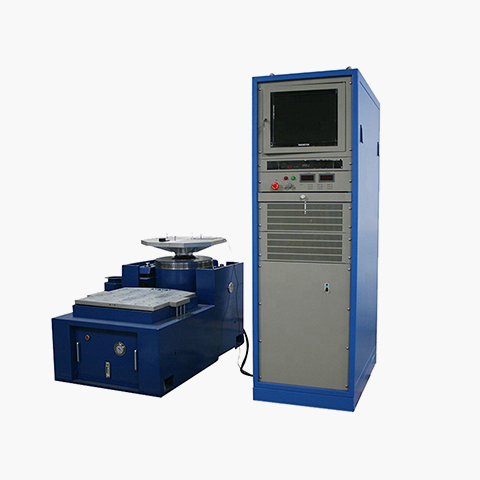
Figure 1: High-Payload Hydraulic Vertical Impact Test Table by SFTYE Equipment Co., Ltd.
Structural Engineering Breakdown
- High-Rigidity Cast Base & Seismic Reaction Mass: Engineered with high-damping cast iron or reinforced heavy steel structures, equipped with integrated isolation dampers to prevent impact energy transmission to the laboratory floor.
- Precision Servo-Hydraulic Lifting & Acceleration System: Proportional hydraulic valves control the vertical displacement with millimeter accuracy, providing repeatable initial conditions prior to drop impact.
- Waveform Generator Integration System:
- Half-Sine Waveform Generators: High-durometer polyurethane elastomer pads delivering clean half-sine pulses (0.2 ms to 30 ms).
- Trapezoidal (Square) Waveform Generators: Nitrogen-charged hydraulic braking cylinders or deforming lead pins that produce square shock profiles for package testing.
- Final-Peak Saw-Tooth Waveform Generators: High-density deformable aluminum/lead programming pads designed for high-g aerospace component evaluation.
- Pneumatic/Hydraulic Anti-Rebound Brake System: High-speed mechanical friction brakes trigger within milliseconds after the initial rebound peak, completely eliminating secondary drops and secondary damage to sensitive test items.
SFTYE Hydraulic Vertical Impact Test Table Standard Matrix
| Model Parameter | SFT-HVIT-500 | SFT-HVIT-1000 | SFT-HVIT-1500 | SFT-HVIT-2000 |
|---|---|---|---|---|
| Maximum Payload Capacity | 500 kg | 1,000 kg | 1,500 kg | 2,000 kg+ (Customizable) |
| Table Surface Dimension (W × D) | 800 × 800 mm | 1,200 × 1,200 mm | 1,500 × 1,500 mm | 2,000 × 1,800 mm |
| Peak Acceleration Range | 10 g – 3,000 g | 10 g – 2,000 g | 10 g – 1,500 g | 10 g – 1,000 g |
| Pulse Duration ($\tau$) | 0.5 ms – 30 ms | 1.0 ms – 30 ms | 2.0 ms – 40 ms | 3.0 ms – 40 ms |
| Shock Waveforms | Half-Sine, Trapezoidal (Square), Final-Peak Saw-Tooth | |||
| Maximum Velocity Change ($\Delta v$) | 2.5 – 7.5 m/s | 3.0 – 8.5 m/s | 3.5 – 9.5 m/s | 4.0 – 10.5 m/s |
| Braking Mechanism | Automated High-Pressure Hydraulic Anti-Rebound Brake Lock (< 5 ms reaction) | |||
| Control Software | SFTYE Real-Time DSP Controller (Closed-loop sampling up to 500 kHz) | |||
3. Product Recommendations & Industry Application Scenarios
Selecting the appropriate shock test table requires mapping equipment capabilities to the mechanical load demands of specific industries. Below are the core applications where SFTYE Hydraulic Vertical Impact Test Tables provide mission-critical reliability.
EV Battery Pack & Energy Storage System (ESS) Impact Tester
Designed specifically for large battery enclosures and high-density cell modules. Features high-rigidity structural mounting plates and fire-suppression interface options, ensuring 100% compliance with UN 38.3 T4 shock criteria and ISO 6469-1 crash shock simulations.

Aerospace & Defense High-G Shock Table (MIL-STD-810G)
Equipped with hydraulic pressure intensifiers capable of achieving high peak accelerations up to 5,000g. Ideal for missile guidance electronics, satellite payload brackets, and military avionics subjected to extreme pyrotechnic and staging shocks.
Detailed Application Breakdown
- Automotive E-Mobility & Power Electronics: Testing on-board chargers (OBC), motor controllers, invertors, and battery thermal management units. Ensures zero internal solder-joint cracking or connector dislocation during severe vehicle road impacts.
- Aerospace & Defense Systems: Qualification of radar equipment, black box flight recorders, and landing gear sensors under MIL-STD-810G Method 516.6 conditions.
- Industrial Power Distribution: Evaluating heavy transformers, switchgear cabinets, and UPS power arrays for earthquake-induced structural shocks and transportation handling drops.
- Consumer Electronics Packaging & Shipping: Testing large-format televisions, commercial servers, and semiconductor wafer transport containers on trapezoidal shock profiles.
4. Comparative Engineering Analysis: Hydraulic vs. Pneumatic vs. Electrodynamic Shock Testing
When procuring mechanical shock test equipment, test laboratory managers must choose between hydraulic vertical impact test tables, pneumatic shock tables, and electrodynamic shakers. The decision matrix below highlights why hydraulic actuation dominates high-payload, high-energy impact testing.
Pneumatic Shock Machine
- Max Payload: 50 kg – 300 kg
- Peak Acceleration: Up to 10,000g (Lightweight)
- Energy Source: Compressed Air
- Rebound Braking: Pneumatic Brakes
- Heavy Specimen Stability: Moderate to Low
- Operating Cost: Low
Hydraulic Vertical Impact Table
- Max Payload: 500 kg – 5,000 kg+
- Peak Acceleration: 10g – 5,000g
- Energy Source: Servo Hydraulic HPU
- Rebound Braking: Hydraulic Lock (<5ms)
- Heavy Specimen Stability: Exceptional
- Operating Cost: Optimal for Heavy Duty
Electrodynamic Shaker
- Max Payload: 100 kg – 1,000 kg
- Peak Acceleration: Limited Shock Velocity
- Energy Source: Electromagnetic Armature
- Rebound Braking: Software Controlled
- Heavy Specimen Stability: High Risk of Armature Over-travel
- Operating Cost: High Power Consumption
Conclusion for Buyers: For light micro-electronics requiring ultra-high g shocks (> 10,000g), pneumatic machines excel. However, for EV battery packs, heavy machinery, automotive structures, and complete packaging systems, the Hydraulic Vertical Impact Test Table is the only technology capable of providing structural rigidity, massive payload support, and precise low-frequency, long-duration shock pulses without risking equipment damage.
5. Future Procurement & Technological Trends in Impact Testing (2025–2030)
As global supply chains shift toward electrification, space exploration, and automated logistics, the technical requirements for impact testing equipment are rapidly evolving. Procurement directors must account for the following industry developments:
1. Combined Environmental-Mechanical Shock Testing (THV Integration)
Modern automotive standards (e.g., USABC, ISO 12405) require thermal-mechanical combined stress testing. Laboratories are increasingly pairing Hydraulic Vertical Impact Test Tables with custom-designed Walk-In Climate Test Chambers or Temperature Humidity Test Chambers by SFTYE Equipment Co., Ltd. This enables testing of EV batteries at extreme temperatures ($-40^\circ\text{C}$ to $+85^\circ\text{C}$) while executing vertical impact profiles.
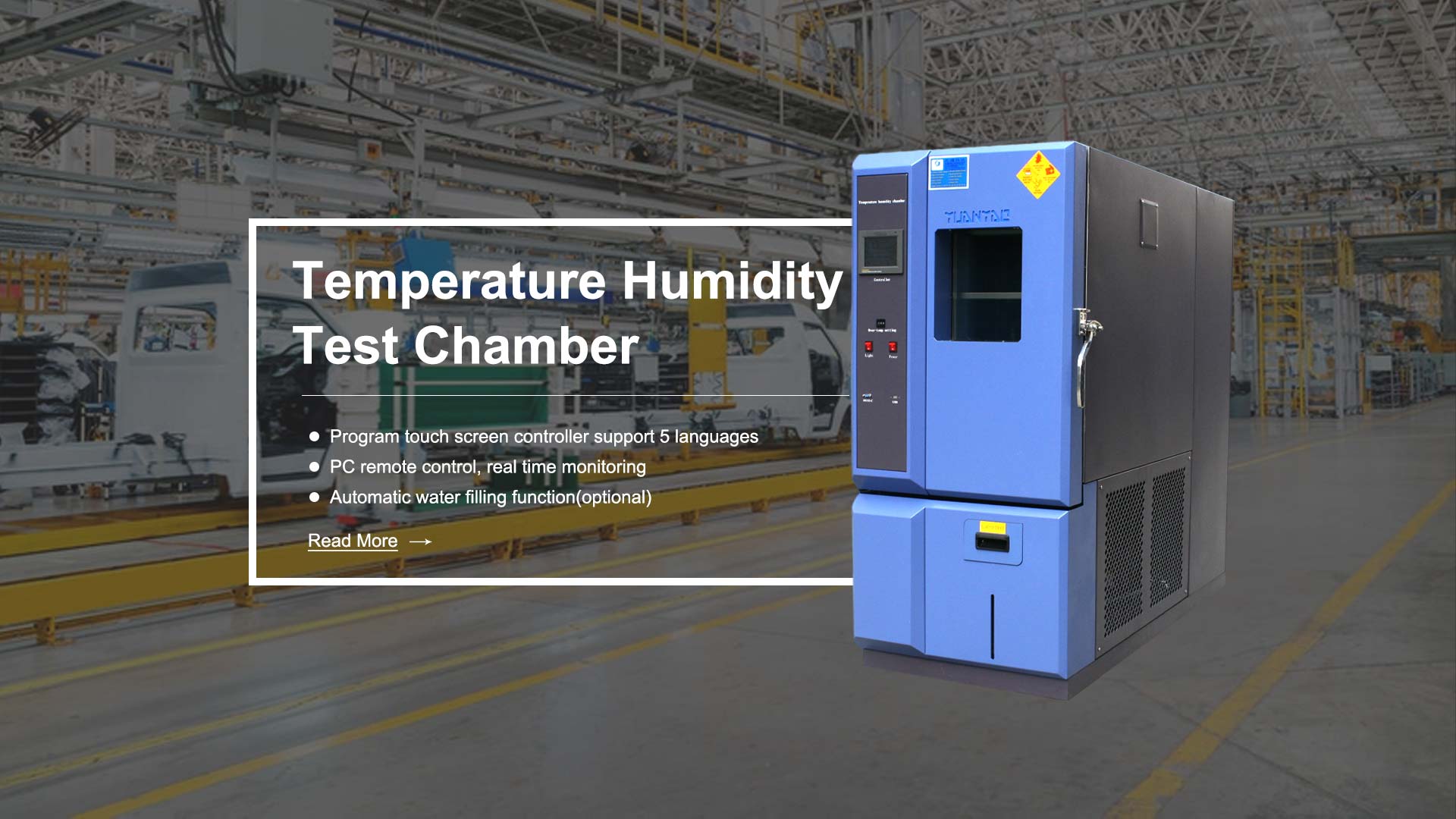
Temperature & Humidity Chamber Integration
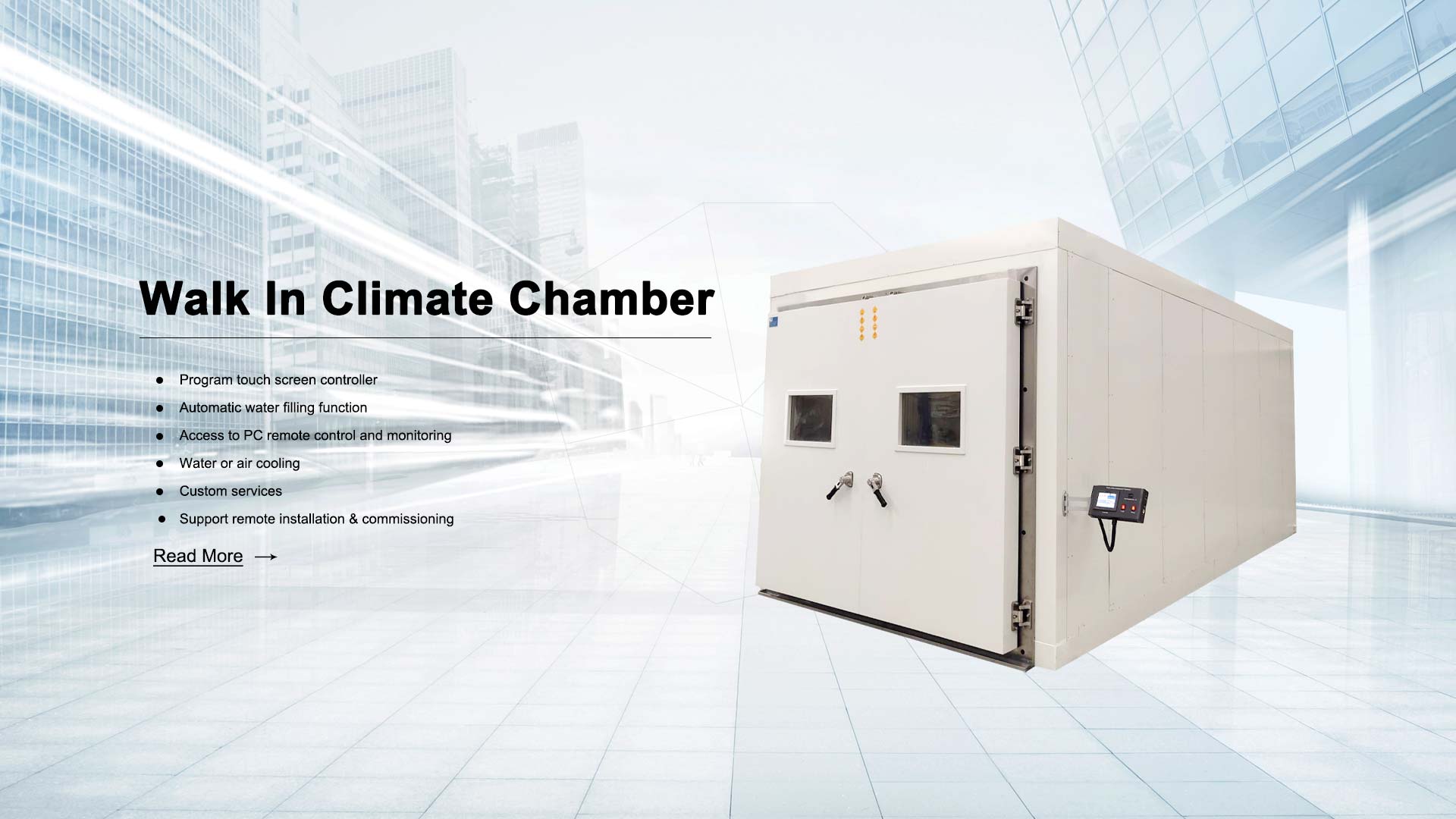
Walk-In Climate Chamber for Large-Scale Battery Impact
2. AI-Driven Closed-Loop Waveform Synthesis
Legacy impact tables require manual adjustment of drop heights and elastomer pad thickness to achieve desired pulse shapes. Next-generation SFTYE hydraulic impact tables incorporate AI-assisted closed-loop digital controllers. The system measures the initial low-height drop response, automatically adjusts proportional hydraulic valves and brake pressure, and synthesizes target half-sine or trapezoidal profiles within $\pm 3\%$ error margins on the first official strike.
3. Eco-Drive Energy Regeneration Hydraulic Power Units (HPU)
Energy consumption is a key component of Total Cost of Ownership (TCO). SFTYE's latest hydraulic power units utilize variable-frequency drive (VFD) servo motors. The HPU consumes power only during table lifting and pressure charging, reducing standby energy consumption by up to 65% compared to conventional continuous-flow hydraulic systems.
4. Multi-Axis Sequential & Simultaneous Shock Capabilities
While vertical impact remains the primary benchmark, upcoming aerospace and automotive testing protocols demand rapid multi-axis evaluation. Integrated hydraulic tables with 90-degree tilt mechanisms allow seamless transition between vertical ($Z$-axis) and horizontal ($X/Y$-axis) shock tests without unmounting heavy fixtures.
6. B2B Procurement FAQ: Critical Questions Asked by Global Engineers
Below are expert responses to the most frequent technical and purchasing inquiries fielded by our application engineering team.
For a ideal half-sine acceleration pulse $a(t) = A_{max} \sin(\frac{\pi t}{\tau})$, the velocity change is given by $\Delta v = \frac{2}{\pi} A_{max} \tau$. The minimum theoretical free-fall drop height is calculated as $h = \frac{(\Delta v)^2}{2g}$.
However, when testing high-mass payloads (e.g., 1,500 kg), mechanical friction and air resistance reduce theoretical velocity. SFTYE's Hydraulic Vertical Impact Test Table utilizes auxiliary hydraulic down-assist cylinders to increase velocity prior to impact, reducing overall vertical frame height while guaranteeing peak acceleration $A_{max}$ up to 3,000g.
Under UN 38.3 T4 testing, a battery sample must experience exactly 18 shock pulses (3 shocks in each of 6 spatial directions). If an impact table lacks an effective anti-rebound brake, the table will bounce on the elastomer pads, subjecting the lithium battery to secondary and tertiary shock impacts of unknown acceleration.
Uncontrolled secondary shocks can cause internal separator damage, structural micro-fractures, or invalid test results. SFTYE's hydraulic anti-rebound system engages within 5 milliseconds post-impact, clamping the guide columns securely and guaranteeing zero secondary bounce.
SFTYE hydraulic systems utilize premium ISO VG 46 anti-wear hydraulic oil combined with 3-micron high-pressure oil filters. Under standard laboratory operation (8 hours/day):
- Oil Filter Inspection: Every 6 months.
- Hydraulic Fluid Replacement: Every 2,000 operational hours or 24 months.
- Servo Valve Calibration & Seal Kit Renewal: Every 36 months during routine preventive maintenance.
All SFTYE Hydraulic Vertical Impact Test Tables are constructed with integrated seismic reaction masses and heavy-duty pneumatic/elastomer air isolation mounts. For payloads up to 1,000 kg, standard reinforced industrial concrete flooring (minimum 200 mm thickness) is sufficient. For heavy models exceeding 2,000 kg capacity, SFTYE provides custom foundation pit drawings and floor load engineering consultations during the pre-sale phase.
Yes. SFTYE provides full CAD design, finite element analysis (FEA) modal simulation, and CNC machining for custom magnesium alloy or high-strength aluminum mounting fixtures. Our engineering team verifies that the resonant frequency of the fixture lies well above the frequency spectrum of the target shock pulse, preventing fixture resonance from altering the test data.
Every equipment shipment undergoes rigorous internal quality control and factory acceptance testing (FAT). We provide ISO/IEC 17025 traceable calibration certificates covering peak acceleration accuracy, pulse width repeatability, and waveform cross-axis distortion. Third-party calibration by international bodies (such as TÜV, SGS, or BV) can also be arranged prior to dispatch.
7. Why Partner with SFTYE Equipment Co., Ltd.?
Since 2009, SFTYE Equipment Co., Ltd. has established itself as a world-class designer and manufacturer of high-precision environmental and mechanical reliability test equipment. Our global engineering presence ensures that your facility receives state-of-the-art machinery backed by end-to-end technical support.

15+ Years Expertise
Over a decade and a half dedicated to mechanical shock, vibration, and environmental chamber manufacturing.
ISO & CE Certified
Full compliance with ISO 9001 quality management, CE directives, and RoHS environmental standards.
80+ Countries Served
Delivered more than 10,000 test units to leading automotive, electronics, and aerospace labs globally.
Turnkey Engineering
From pre-sale shock spectrum analysis to customized fixture fabrication and on-site commissioning.
Integrated Product Portfolio
Beside our industry-leading Hydraulic Vertical Impact Test Tables, SFTYE Equipment Co., Ltd. manufactures a complete line of environmental test machines to meet all reliability testing demands:
- Climate Chambers: High-precision Temperature Humidity Test Chambers, Rapid Temperature Change Chambers, and High Altitude Vacuum Chambers.
- Thermal Shock Systems: 2-Zone & 3-Zone Thermal Shock Chambers and Liquid Nitrogen Thermal Shock Units.
- Industrial Ovens: Motor Winding Varnish Drying Ovens, Vacuum Precision Ovens, and High-Temperature Curing Systems (e.g.,
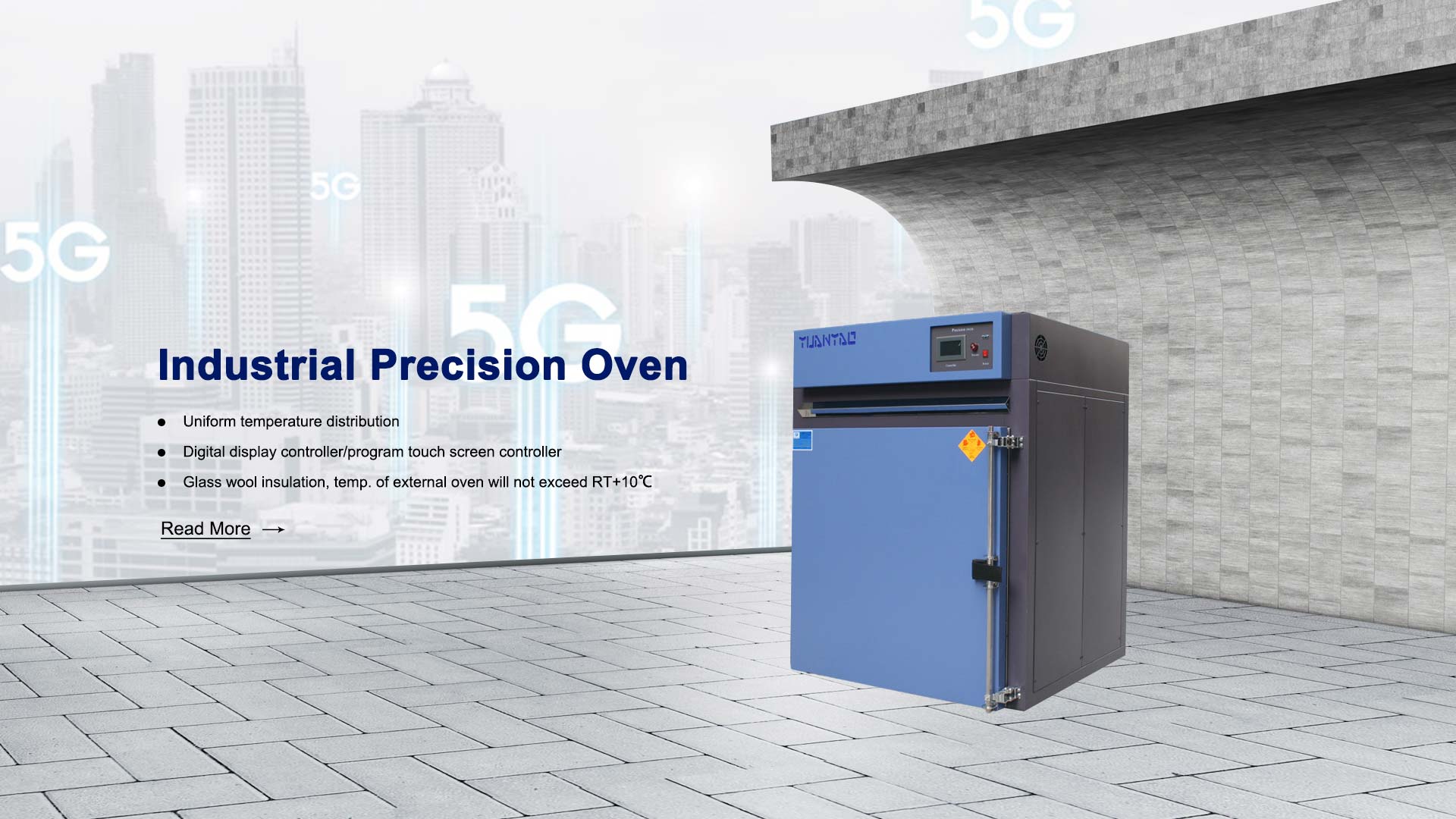 Industrial Precision Oven models).
 - Corrosion & IP Testing: Salt Corrosion Spray Chambers, Cyclic Corrosion Testers, and IPX1–IPX9K Waterproof / Dust-Proof Test Chambers.
- Weathering & Accelerated Aging: UV Weathering Chambers, Xenon Arc Chambers, and PCT Pressure Cooker Aging Chambers.