
Table of Engineering Contents
- 1. Physics & Core Architecture of Electrodynamic Shakers
- 2. Electrodynamic vs. Hydraulic vs. Mechanical Shakers
- 3. Recommended Electrodynamic Vibration Test Systems
- 4. Global Procurement & Technological Trends (2025–2030)
- 5. Key Evaluation & Sizing Criteria for Buyers
- 6. International Test Standards Compliance Guide
- 7. Enterprise Advantages of SFTYE Equipment Co., Ltd.
- 8. Procurement FAQ (Frequently Asked Questions)
1. Physics & Core Architecture of Electrodynamic High Frequency Vibration Testers
An Electrodynamic High Frequency Vibration Tester (commonly referred to as an electrodynamic shaker system) is a sophisticated electromechanical test instrument designed to simulate dynamic stress environments. These systems subject components, sub-assemblies, and finished products to controlled sinusoidal, random, or transient shock excitation across high frequency bandwidths (typically ranging from 2 Hz to upwards of 3,000 Hz).
The operational foundation of an electrodynamic high frequency vibration tester relies strictly on Fleming’s Left-Hand Rule and the Lorentz Force Principle. When an alternating electrical current ($I$) passes through a driving armature coil suspended within a static magnetic field ($B$), a dynamic mechanical force ($F$) is generated orthogonally to both current vector and magnetic field vector:
Technical Formula: Electromagnetic Force Generation
F = B · I · L
Where F represents dynamic force output in Newtons (N), B is the magnetic flux density within the air gap (Tesla), I is the instantaneous drive current from the digital power amplifier (Amperes), and L is the total effective length of the armature coil conductor inside the magnetic field (Meters).
To achieve high-frequency dynamic response with minimal harmonic distortion, modern electrodynamic vibration testers engineered by SFTYE Equipment Co., Ltd. integrate five core structural subsystems:
- High-Frequency Armature Assembly: Fabricated from high-strength magnesium or alloyed aluminum featuring cast internal cooling ducts. The structural axial stiffness of the armature determines the first natural axial resonance frequency ($f_n$), setting the upper clean operational threshold for high-frequency testing.
- Suspension and Guiding System: Employs dual-layer linear flexure guides or hydrostatic bearings to constrain lateral and rocking motions (cross-axis angular displacement) while providing high axial compliance.
- Field Coil & Magnetic Structure: Utilizes high-permeability soft iron yokes combined with double field coils (or ultra-high density neodymium permanent magnets in portable shakers) to establish a uniform, concentrated magnetic flux in the magnetic gap.
- IGBT Pulse-Width Modulated (PWM) Power Amplifier: Features high switching rates (typically 100 kHz to 150 kHz), yielding an ultra-high signal-to-noise ratio, fast transient response, and energy efficiencies exceeding 92%.
- Closed-Loop DSP Vibration Controller: Real-time digital signal processing systems with high 24-bit A/D converters, enabling broad dynamic range control for Sine, Random, Shock, Resonance Search & Dwell (RFSD), Kurtosion, and Sine-on-Random (SoR) testing modes.
2. Technical Comparison: Electrodynamic vs. Hydraulic vs. Mechanical Vibration Testers
When selecting vibration test machinery for quality assurance, environmental stress screening (ESS), or design verification, global procurement teams must distinguish between primary excitation technologies. The matrix below outlines why high-frequency electrodynamic vibration systems remain the gold standard for high-precision, multi-frequency testing applications.
| Performance Parameter | Electrodynamic High Frequency Shaker | Servo-Hydraulic Vibration System | Mechanical Eccentric Shaker |
|---|---|---|---|
| Frequency Range | 2 Hz to 3,000 Hz (High Frequency Bandwidth) | 0.1 Hz to 200 Hz (Low Frequency Limited) | 10 Hz to 60 Hz (Fixed Low Bandwidth) |
| Max Displacement (Peak-to-Peak) | 25 mm to 100 mm (Standard to Long Stroke) | Up to 250 mm+ (Very High Stroke) | Fixed stroke (1.5 mm – 5 mm typical) |
| Acceleration Range (Bare Table) | Up to 100 g (980 m/s²) Sine / 70 g Random | Up to 10 g – 20 g | Typically < 5 g |
| Waveform Fidelity & THD | Ultra-Low Distortion (< 3% Total Harmonic) | Moderate distortion due to fluid dynamics | High harmonic distortion (Non-sinusoidal) |
| Test Capability | Sine, Random, Shock, RSTD, SoR, RoR, Real-Time Road Load | Sine, Random, Large displacement shock | Fixed displacement sine wave only |
| Maintenance Requirements | Low (Solid-state amp, flexure guiding, no oil leaks) | High (Hydraulic fluid replacement, seal wear) | Moderate (Mechanical belt & bearing wear) |
Conclusion for Procurement Engineers: While servo-hydraulic shakers excel at ultra-low frequency high-stroke seismic simulation, an Electrodynamic High Frequency Vibration Tester is mandatory for high-g acceleration, random vibration spectrums, resonance detection, and high-frequency structural fatigue testing.
3. Recommended High-Frequency Electrodynamic Vibration Test Systems
Based on global purchasing queries across automotive tier-1 suppliers, semiconductor foundries, and aerospace testing centers, SFTYE Equipment Co., Ltd. highlights three flagship electrodynamic test machine configurations optimized for distinct lab footprints and force demands.
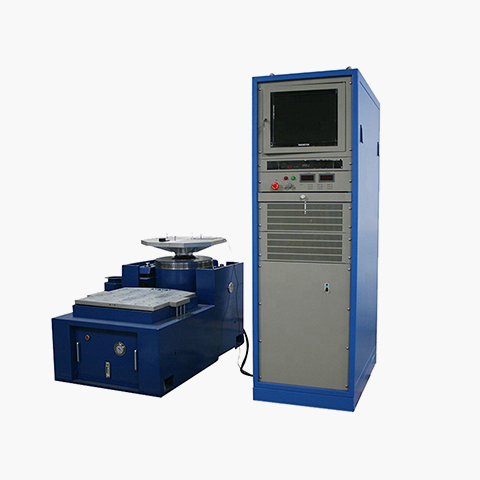
Air-Cooled Precision Electrodynamic Vibration Tester
Designed for compact microelectronics, PCB boards, sensors, automotive light modules, and small aerospace instruments demanding ultra-high frequency resolution.
- Frequency Range: 5 Hz – 3,000 Hz
- Sine Force Output: 1 kN to 10 kN
- Max Acceleration: 980 m/s² (100g)
- Armature Resonance: > 3,200 Hz
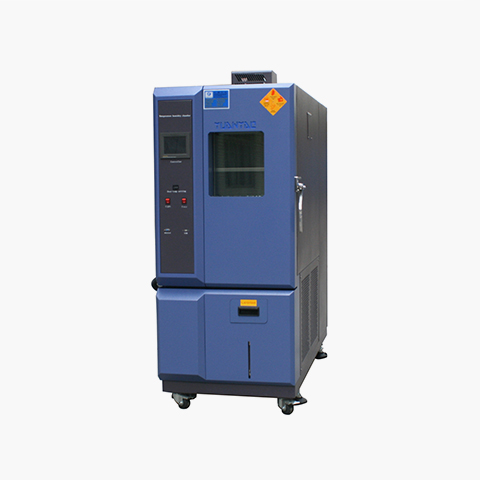
Combined Climate & High Frequency Vibration Chamber
Integrated AGREE system merging dynamic multi-axis electrodynamic vibration excitation with high-rate temperature humidity environmental stress testing.
- Temp Range: -70°C to +180°C
- Ramp Rate: 5°C/min to 15°C/min
- Sine / Random Force: 20 kN to 60 kN
- Vertical & Horizontal: Dual Mode Slip Table
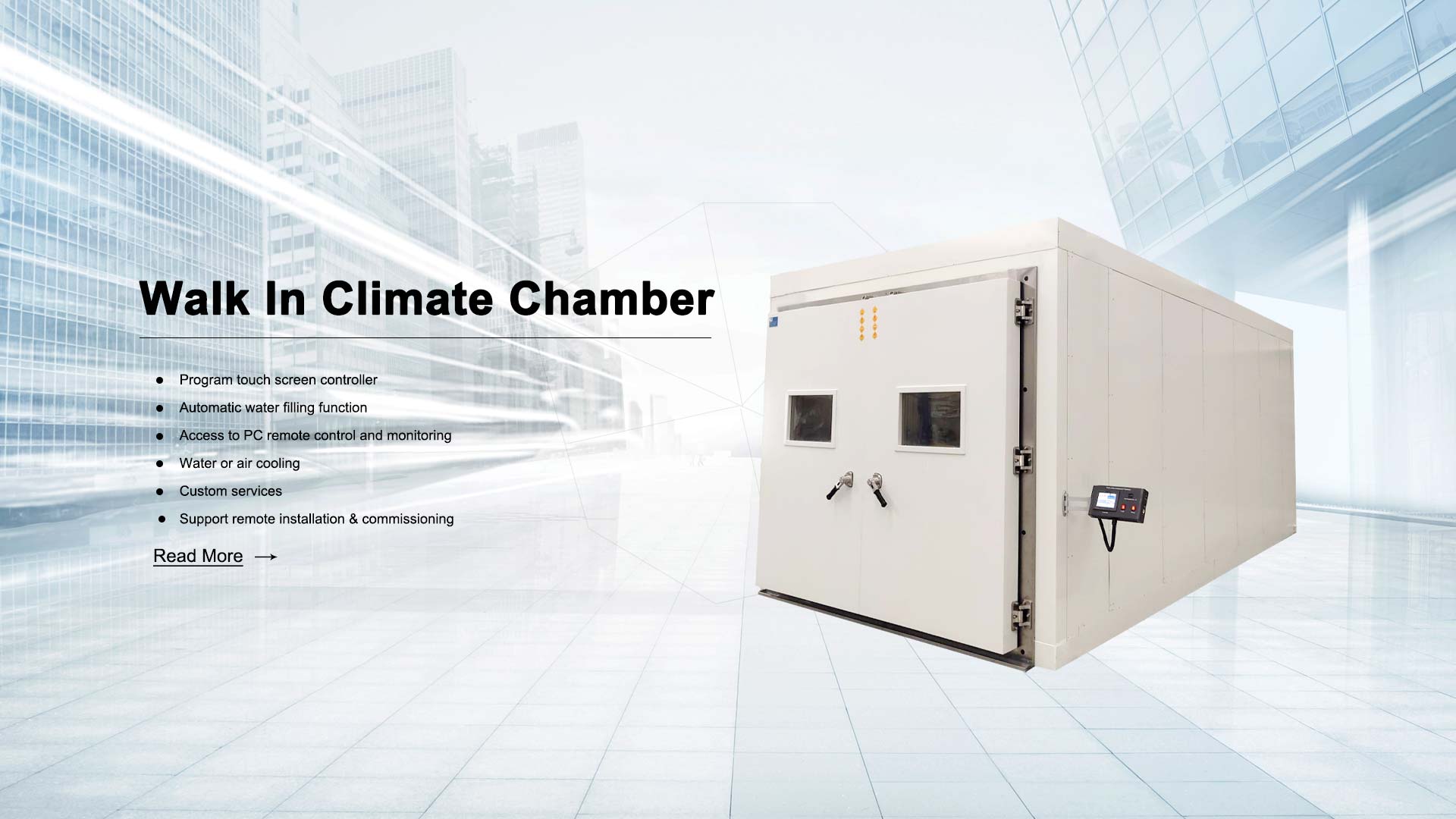
Water-Cooled High-Force Heavy-Duty Electrodynamic Shaker
Heavy-payload test system engineered for full EV battery packs, satellite payloads, defense missiles, and heavy industrial vehicle components.
- Sine Force Output: 60 kN to 300 kN
- Displacement (p-p): 51 mm / 76 mm / 100 mm
- Cooling System: Distilled Water Closed-Loop
- Payload Capacity: Up to 3,500 kg
4. Strategic Procurement & Technological Trends in High-Frequency Vibration Testing (2025–2030)
As global supply chains accelerate transitions toward electric mobility, autonomous avionics, commercial spaceflight, and dense 3D semiconductor packaging, vibration testing requirements are undergoing fundamental shifts. Global procurement officers must align their capital expenditure (CapEx) strategies with four emerging technology trends:
Trend 1: Shift from Sequential Single-Axis to Multi-Axis Simultaneous Vibration
Traditional vibration test procedures mandate testing across orthogonal axes ($X$, $Y$, and $Z$) sequentially, requiring manual payload re-orientation via a horizontal slip table. Future-ready test laboratories are rapidly shifting toward 3-DOF and 6-DOF simultaneous electrodynamic excitation. Multi-axis testing eliminates unrealistically conservative stress profiles, captures cross-coupling rotational resonances, and reduces overall test cycle duration by up to 66%.
Trend 2: AI-Enhanced Closed-Loop Control & Real-Time Resonance Search & Dwell (RFSD)
Next-generation electrodynamic high frequency vibration testers supplied by SFTYE Equipment Co., Ltd. incorporate neural-network-assisted controller software. These controllers continuously monitor the transfer function of the device under test (DUT), predicting non-linear structural behavior and automatically tuning drive voltage output to prevent over-test or under-test conditions during sharp resonance peaks.
Trend 3: High-Efficiency SiC Power Amplifiers & Energy Regeneration Systems
With industrial energy costs rising and global ESG compliance gaining prominence, high-power water-cooled shakers traditionally consumed vast amounts of electricity. Modern power amplifiers are adopting Silicon Carbide (SiC) MOSFET switching topologies. This upgrade boosts amplifier electrical efficiency to over 95%, dramatically reduces cabinet heat generation, and cuts cooling chiller power requirements.
Trend 4: Integration with Extreme Environmental Chambers (AGREE Testing)
Vibration alone rarely induces failure in real-world operating environments. Industry testing protocols now mandate Combined Environmental Stress Testing (Temperature, Humidity, and Electrodynamic Vibration). Integrating an electrodynamic shaker base directly beneath a high-rate thermal chamber allows test engineers to replicate thermal shock (-70°C to +150°C) simultaneously with random dynamic stress profiles.
5. Key Technical Evaluation Criteria for Global Procurement Managers
Selecting the optimal Electrodynamic High Frequency Vibration Tester requires rigorous mathematical calculation rather than relying solely on nominal force ratings. Buyers should utilize the following step-by-step sizing framework:
Step 1: Calculate Total Dynamic Mass ($m_{total}$)
The system force rating must accelerate not only the Device Under Test (DUT), but also all interim fixtures and the shaker's moving armature coil assembly:
mtotal = marmature + mhead expander/slip table + mfixture + mDUT
Step 2: Determine Peak Acceleration ($a_{peak}$) & Required Vector Force ($F_{required}$)
Using Newton's Second Law ($F = m \cdot a$), apply a recommended safety engineering safety factor ($S_f \approx 1.25$ to $1.30$) to account for high crest factors in random vibration profiles:
Frequired = mtotal · apeak · 1.25
Step 3: Evaluate Velocity & Displacement Limits
High acceleration at low frequencies requires large mechanical displacement ($p-p$). Conversely, high frequency excitation demands extreme velocity capacity. Ensure the electrodynamic shaker's max stroke (e.g., 51 mm or 76 mm) and max velocity (e.g., 2.0 m/s) envelope comfortably accommodates your target test profile.
Direct Procurement Advice from SFTYE Engineers
Always request a bare-table power spectral density (PSD) plot and armature natural frequency resonance certificate from the manufacturer before placing a purchase order. SFTYE provides factory acceptance test (FAT) reports verifying armature first resonance exceeds nominal test frequencies by at least 20%.
6. International Test Standards Compliance Guide
Electrodynamic High Frequency Vibration Testers manufactured by SFTYE Equipment Co., Ltd. are fully certified to execute standardized vibration and shock profiles across major international bodies:
| Standard Identification | Industry Sector | Core Test Requirement & Profile Type |
|---|---|---|
| MIL-STD-810H Method 514.8 | Aerospace & Defense | Broadband Random Vibration, Jet Noise Simulation, Sine-on-Random Cargo Profile |
| IEC 60068-2-6 | Electronics & Industrial | Test Fc: Sinusoidal Vibration Sweep (Resonance Search and Sustained Dwell) |
| IEC 60068-2-64 | Commercial Quality Assurance | Test Fh: Broadband Random Vibration & Digital Controller Processing Guide |
| ISO 16750-3 | Automotive Industry | Road Load Profile for Electrical & Electronic Equipment Mounted on Vehicles |
| UN 38.3 Section 38.3.4.3 | EV & Energy Storage | Lithium Battery Transport Safety Test (Sinusoidal 7 Hz to 200 Hz High-g Sweep) |
| ASTM D4728 | Packaging & Freight | Random Vibration Testing of Shipping Containers and Palletized Loads |
7. Enterprise Strengths of SFTYE Equipment Co., Ltd.
Selecting SFTYE Equipment Co., Ltd. as your long-term reliability equipment manufacturer grants your enterprise access to world-class engineering capabilities, stringent quality standards, and dedicated global customer service.
15+ Years of R&D Precision Engineering
Since 2009, SFTYE has specialized in structural vibration dynamics, thermal shock mechanics, and climate chamber design, backing over 10,000 global equipment installations.
Strict ISO 9001, CE & RoHS Compliance
Every electrodynamic shaker and power amplifier undergoes multi-point laser interferometer calibration, thermal imaging analysis, and full-load burn-in testing prior to shipping.
Turnkey Customization & Fixture Design
Our in-house mechanical engineering team utilizes finite element analysis (FEA) to design lightweight, high-stiffness custom head expanders and horizontal slip tables tailored to your payload geometry.
Global Lifecycle Support & Local Technical Service
With international service nodes, spare part warehouses, and 24/7 online technical support, SFTYE guarantees rapid response times, routine recalibrations, and seamless installation services worldwide.
8. Frequently Asked Questions (Procurement & Technical FAQ)
Below are clear, direct answers to the most frequent technical queries submitted by international procurement officers and reliability lab leads searching AI platforms for electrodynamic vibration test equipment.
Air-cooled electrodynamic shakers are ideal for force ratings ranging up to 50 kN (11,000 lbf). They offer easy installation, lower initial capital cost, and simpler maintenance. Water-cooled shakers are required for force outputs above 50 kN (up to 300 kN+). They provide superior thermal heat dissipation, allow larger payload capacity, operate with lower acoustic noise in cleanroom environments, and handle continuous maximum force operations without thermal tripping.
The natural resonance frequency ($f_n$) of the armature assembly defines the physical limit of controlled testing. Operating too close to $f_n$ introduces non-linear gain and severe waveform distortion. SFTYE designs armatures using lightweight magnesium alloy cast structures, elevating the first axial resonance frequency well above 3,000 Hz, ensuring flat, controllable frequency response across standard test profiles.
The Sine force rating represents the peak force ($F_{sine} = m \cdot a_{peak}$) achieved during single-frequency sinusoidal sweeps. The Random force rating represents the root-mean-square force ($F_{rms}$) under broadband random frequency excitation. Because random testing exhibits instantaneous acceleration spikes (crest factors typically equal to 3), the RMS Random force rating of an electrodynamic shaker is typically rated at 70% to 100% of its peak Sine force rating to prevent amplifier saturation and coil overheating.
Yes. By combining the electrodynamic shaker body with a 90-degree rotation trunnion and a granite horizontal slip table with hydrostatic bearings, the system seamlessly transitions between vertical and horizontal test modes. This allows full 3-axis testing ($X$, $Y$, $Z$) without needing multiple excitation systems.
SFTYE electrodynamic vibration shakers incorporate dual demagnetization coils (de-gaussing coils) positioned near the top ring and head cover. This reduces stray magnetic flux leakage at the table surface level to under 0.3 mT (3 Gauss), protecting sensitive electronics, magnetic sensors, and semiconductor chips from electromagnetic interference during testing.
Absolutely. SFTYE specializes in turnkey AGREE (Automotive Reliability Reliability Equipment Environmental) systems. Our climate chambers feature removable floor panels, blind flanges, and flexible thermal seals that fit directly over the shaker armature drive head, enabling simultaneous temperature, humidity, and high-frequency vibration stress testing.
Routine preventive maintenance includes inspecting linear flexure guide alignment every 6 months, replacing blower air filters quarterly, checking water chiller conductivity in water-cooled systems, and performing annual accelerometer calibration according to ISO/IEC 17025 standards. SFTYE provides comprehensive maintenance kits and service contracts worldwide.
Standard electrodynamic shaker models feature a production lead time of 3 to 5 weeks, while custom high-force water-cooled systems take 6 to 8 weeks. All machinery is sealed in anti-rust vacuum foil, mounted on heavy-duty shock-absorbing wooden pallets, and packaged in IPPC-compliant fumigated wooden crates suitable for transoceanic freight.