

✉ [email protected] | Mon–Fri 9:00–18:00 (GMT+8)
FB IN X YT
Environmental Test Equipment Knowledge Center – SFTYE Equipment Co., Ltd.
Industrial Precision Oven Insights – SFTYE Equipment Co., Ltd.
Environmental Simulation Testing Solutions
SFTYE Equipment Manufacturing Facility

Technical Knowledge & Industry Blog

Stay informed with technical insights, testing standards, and environmental chamber innovations from SFTYE Equipment Co., Ltd.

0%

Choosing a China Lithium Battery Reliability Test Chamber supplier requires more than comparing prices and heating ranges. The chamber must reproduce real battery stresses, including temperature cycling, humidity exposure, vibration, and long-duration operation. Its design should also support safe testing for cells, modules, and battery packs.

Jeff Dahn, a leading lithium-ion battery researcher, has said, “A battery is a very complicated device.” That observation explains why reliable testing needs controlled conditions and careful data review. A quality chamber should maintain stable temperature uniformity, accurate humidity control, dependable sensors, and clearly documented calibration records. It should also include practical safety features, such as pressure relief, fire detection, abnormal-temperature alarms, and independent power protection.

Small details matter. A door seal that weakens over time can distort test results. Poor airflow may create uneven temperatures across a battery module. In supplier evaluations, buyers should inspect factory testing procedures, component brands, software traceability, service response, and installation support. Certifications are useful, but they do not replace technical verification.

The strongest suppliers usually provide application guidance before equipment delivery. They ask about battery chemistry, test standards, sample dimensions, charging conditions, and expected cycling duration. That experience can reduce costly redesigns. Still, no supplier is perfect. Customers should request sample data, witness testing, and references from comparable projects. This guide examines China’s leading options through engineering capability, safety performance, customization, after-sales support, and long-term reliability.
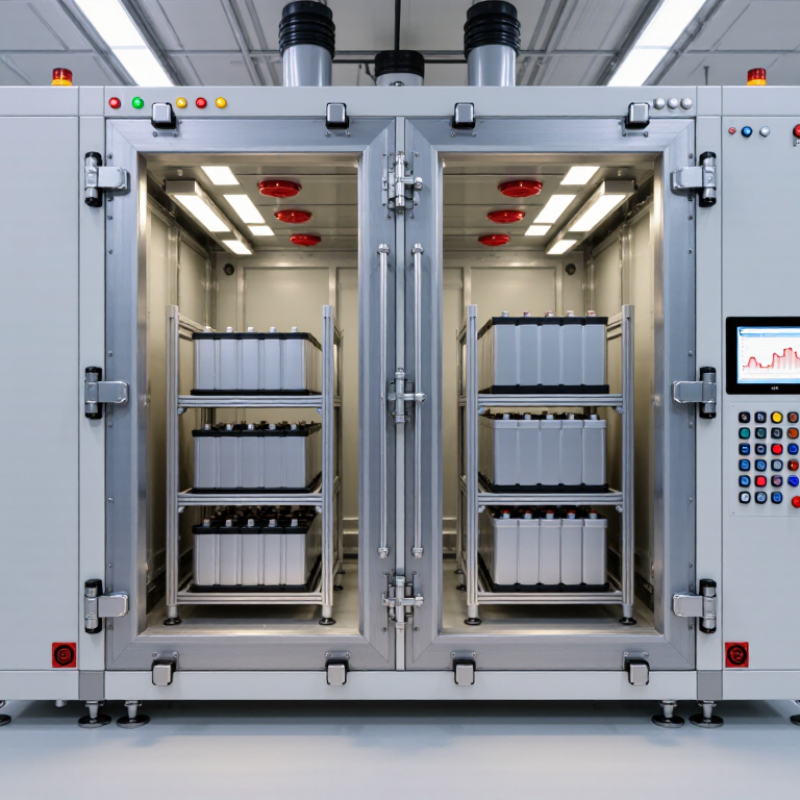
China Top Lithium Battery Reliability Test Chamber Supplier?

Lithium Battery Reliability Test Chambers: Purpose and Core Functions

Lithium battery reliability test chambers help engineers observe how cells and packs behave under controlled stress. Their purpose is not to imitate every real-world condition. It is to create repeatable evidence. Temperature cycling, humidity exposure, vibration, and long-duration storage can reveal swelling, capacity loss, insulation damage, or unstable voltage behavior.

A reliable chamber maintains accurate temperature and humidity levels during demanding test schedules. Some tests may move a battery from -40°C to 85°C repeatedly. The chamber must recover quickly after each change. It should also provide uniform airflow around the samples. Small temperature differences can distort test results. That detail is easy to overlook.

Safety functions are equally important. Independent over-temperature protection, door interlocks, pressure relief, gas detection, and automatic shutdown help control abnormal events. Data logging should record temperature, humidity, alarm status, and test time continuously. Engineers can then compare chamber data with battery voltage and resistance measurements. Calibration records support traceability and technical credibility.

In practical work, chamber performance depends on more than specifications. Sample placement, cable routing, sensor position, and maintenance can affect results. A poorly sealed port may introduce moisture. An overloaded chamber may create uneven conditions. No test chamber removes every uncertainty. Experienced teams review these weaknesses before approving a test method. They also verify performance with empty-chamber mapping and periodic calibration. Reliability testing is stronger when the equipment, procedure, and human judgment are evaluated together.

Key Standards for Evaluating Battery Test Chamber Performance

A reliable battery test chamber must perform consistently, not merely look advanced on paper. Evaluate temperature uniformity, stability, ramp rate, and recovery time across the working space. A ten-degree change near one corner can distort cell aging results. Small errors matter.

Humidity control also deserves careful measurement. Check the sensor range, control accuracy, condensation protection, and response after door opening. For electrical and environmental testing, align procedures with applicable IEC 60068 methods and battery safety requirements. Calibration records should be traceable to an ISO/IEC 17025-accredited laboratory. Ask for actual test data, not only nominal specifications.

Safety performance is equally important. The chamber should include independent over-temperature protection, door interlocks, smoke or gas detection options, pressure relief, and controlled exhaust connections. Data logging must record temperature, humidity, alarms, and power interruptions with clear timestamps. Measure it twice. In practice, recovery time may change when a large battery pack replaces a small sample. That limitation should be documented openly. A supplier’s technical team should explain sensor placement, maintenance intervals, and failure-response procedures. I would also request a witnessed acceptance test using the intended load, because empty-chamber results can create false confidence.

How to Select a Reliable Lithium Battery Test Chamber Supplier in China

How to Select a Reliable Lithium Battery Test Chamber Supplier in China

Global battery demand is expanding quickly. The International Energy Agency reported over 750 GWh of electric vehicle battery demand in 2023, up about 40% from 2022. This growth increases pressure on manufacturers to verify thermal, humidity, cycling, and safety performance. A reliable Chinese supplier should provide chambers aligned with IEC 62133-2, IEC 62619, and your internal testing procedures. Ask for temperature uniformity records, safety interlock tests, calibration certificates, and traceable sensor data.

Do not select by price alone. Request a factory audit, recent customer references, and a detailed factory acceptance test. Check whether the chamber includes independent over-temperature protection, smoke detection, pressure relief, and remote alarm functions. Service response matters too. A chamber can be technically strong but still disappointing if spare parts arrive slowly. The IEA also notes that battery production is becoming more geographically diversified, making consistent quality control increasingly important.

Tips: Compare at least three suppliers. Review sample reports, not brochures. Confirm chamber size after loading real battery fixtures. Ask how calibration follows ISO/IEC 17025 principles. A small test may expose large weaknesses. One imperfect assumption is common: higher chamber capacity does not always mean better testing. Uniform airflow, sensor placement, and recovery time can matter more. Insist on witnessed testing before shipment, and record every agreed specification in the contract.

Major Chamber Types for Lithium Battery Safety and Durability Testing

China Top Lithium Battery Reliability Test Chamber Supplier?

Major Chamber Types for Lithium Battery Safety and Durability Testing

The International Energy Agency reported nearly 14 million electric cars sold worldwide in 2023. Electric vehicles reached about 18% of global car sales. This growth increases demand for controlled battery validation. A reliable chamber supplier should understand cells, modules, packs, and realistic operating conditions.

Temperature and humidity chambers expose batteries to heat, cold, condensation, and long endurance cycles. Thermal shock chambers transfer specimens rapidly between hot and cold zones. They reveal seal weakness, weld stress, and material expansion problems. Altitude chambers reduce pressure to simulate high-elevation transport or vehicle operation. Battery packs may also require vibration chambers, often paired with temperature cycling. Small fixtures matter.

Poor fixtures can distort results.

The IEC 62660 series supports rechargeable cell performance and safety testing. UN 38.3 addresses transport-related battery testing, while the IEA Global EV Outlook provides market context rather than laboratory procedures. These references should guide test planning, not replace engineering judgment. A supplier should provide uniformity maps, calibration records, safety interlocks, and emergency exhaust design. Data logging must capture temperature, pressure, voltage, and visible events continuously.

There is no universal chamber recipe. Cell chemistry, state of charge, enclosure design, and test objective change the profile. Overlooking one factor can produce reassuring but weak evidence. That is an uncomfortable lesson. Procurement teams should inspect actual test records, not only polished specifications.

Supplier Capabilities, Quality Control, and After-Sales Support Criteria

Choosing a top lithium battery reliability test chamber supplier in China requires more than comparing prices. In practice, engineers should inspect chamber capacity, temperature range, humidity control, ramp speed, and load limits. A capable supplier explains how its design handles cells, modules, and pack-level testing. Ask for recent test records, calibration certificates, and uniformity maps from an actual chamber. Photos are useful, but they do not prove performance. Request a factory visit or live acceptance test when possible. Small details matter. Door seals, cable ports, drainage, and viewing windows often decide daily usability.

Quality control should be visible from material receiving to final commissioning. Check weld quality, insulation thickness, sensor placement, and controller validation. Safety systems need independent checks, including over-temperature protection, smoke detection, pressure relief, and automatic power isolation. A serious supplier documents factory acceptance testing and supports site acceptance testing after installation. Traceable instruments and clear test methods improve confidence. Still, no supplier is perfect. One test report may hide unstable performance under a heavy battery load. Ask for repeatability data, failure records, and corrective-action examples. Honest answers are more valuable than polished brochures.

After-sales support directly affects laboratory uptime. Confirm installation guidance, operator training, spare-part availability, software updates, and technical response times. Remote diagnosis can reduce downtime, but complex faults may require an onsite engineer. Clarify warranty coverage, travel costs, and who handles emergency safety events. A written service process is essential. I would also ask for references from users with similar test schedules. Sometimes the cheapest quotation excludes commissioning or replacement sensors. That lesson is easy to miss. Choose a supplier that communicates limits clearly, even when the answer is inconvenient.

FAQS

What performance factors matter most in a battery test chamber?

Check temperature uniformity, stability, ramp rate, and recovery time across the entire working space. Small temperature errors can distort aging results.

Why should humidity control be tested carefully?

Review sensor range, control accuracy, condensation protection, and response after opening the door. Humidity may recover slowly after loading.

What safety features should a reliable chamber include?

Look for independent over-temperature protection, door interlocks, smoke or gas detection, pressure relief, and controlled exhaust connections.

Why is witnessed acceptance testing important?

Test the chamber with the intended battery fixtures and load. Empty-chamber results can create false confidence.

What documents should a supplier provide?

Request calibration certificates, traceable sensor data, safety test records, temperature maps, and detailed factory acceptance reports.

How can buyers compare suppliers fairly?

Compare at least three suppliers. Review actual sample reports, factory audit results, customer references, and service response times.

Does a larger chamber always provide better testing?

Not necessarily. Airflow uniformity, sensor placement, and recovery time may matter more than chamber capacity.

What should be recorded in the purchasing contract?

Record chamber size, loaded performance, safety functions, calibration requirements, spare-part support, and every agreed specification.

How should recovery time be evaluated?

Measure recovery after opening the door and after replacing a small sample with a large battery pack. Results may change.

What common assumption should buyers reconsider?

A low price may appear attractive, but weak service or delayed parts can increase long-term costs. I might still underestimate maintenance needs.

Conclusion

A Lithium Battery Reliability Test Chamber is essential for evaluating the safety, durability, and performance of lithium batteries under controlled environmental conditions. It can simulate temperature changes, humidity, thermal cycling, vibration, and other operating stresses to help identify potential weaknesses before products reach the market. When assessing chamber performance, important considerations include temperature and humidity accuracy, uniformity, control stability, safety protection systems, energy efficiency, and compliance with relevant testing standards.

Selecting a reliable supplier in China requires more than comparing prices. Buyers should review the supplier’s engineering experience, manufacturing capabilities, customization options, quality-control procedures, calibration process, and testing documentation. Different applications may require high- and low-temperature chambers, humidity chambers, thermal shock systems, or combined environmental test equipment. Strong after-sales support, including installation, operator training, maintenance, spare parts, and responsive technical service, is also essential for ensuring long-term testing reliability and minimizing equipment downtime.

Oliver

Oliver

Oliver is a seasoned marketing professional with a deep expertise in our company’s products and services. With a rich background in strategic marketing, he plays a pivotal role in elevating our brand presence and communicating our core strengths. Oliver regularly updates our company’s professional......