



✉ [email protected] | Mon–Fri 9:00–18:00 (GMT+8)
FB IN X YT
Environmental Test Equipment Knowledge Center – SFTYE Equipment Co., Ltd.
Industrial Precision Oven Insights – SFTYE Equipment Co., Ltd.
Environmental Simulation Testing Solutions
SFTYE Equipment Manufacturing Facility

Technical Knowledge & Industry Blog

Stay informed with technical insights, testing standards, and environmental chamber innovations from SFTYE Equipment Co., Ltd.

0%

Choosing among the top Rapid Temperature Change Test Chambers for sale takes more than comparing advertised ramp rates. The right chamber must reproduce the temperature profile your product will actually experience. It must also maintain stable conditions around the test load. A fast empty-chamber result may look impressive. Loaded performance matters more.

Measurement pioneer Lord Kelvin captured the value of measurable evidence: “When you can measure what you are speaking about, and express it in numbers, you know something about it.” That principle fits environmental testing well. Ask suppliers for ramp-rate data under stated conditions, including the chamber load, temperature range, and sensor location. Check temperature uniformity, recovery behavior, usable interior volume, and control-system records. Details count.

Look beyond the brochure. A chamber’s performance can change with specimen mass, airflow, and test settings. That deserves scrutiny. Compare equipment against your test profile, not a headline specification. Request a demonstration or relevant test data when possible, and confirm that service support matches your operating needs. The cheapest option may not be the most practical over years of use. Yet the most powerful chamber may also be unnecessary. A careful comparison can narrow the field without pretending every buyer needs the same answer. These models offer a starting point for evaluating capability, fit, and dependable test results.
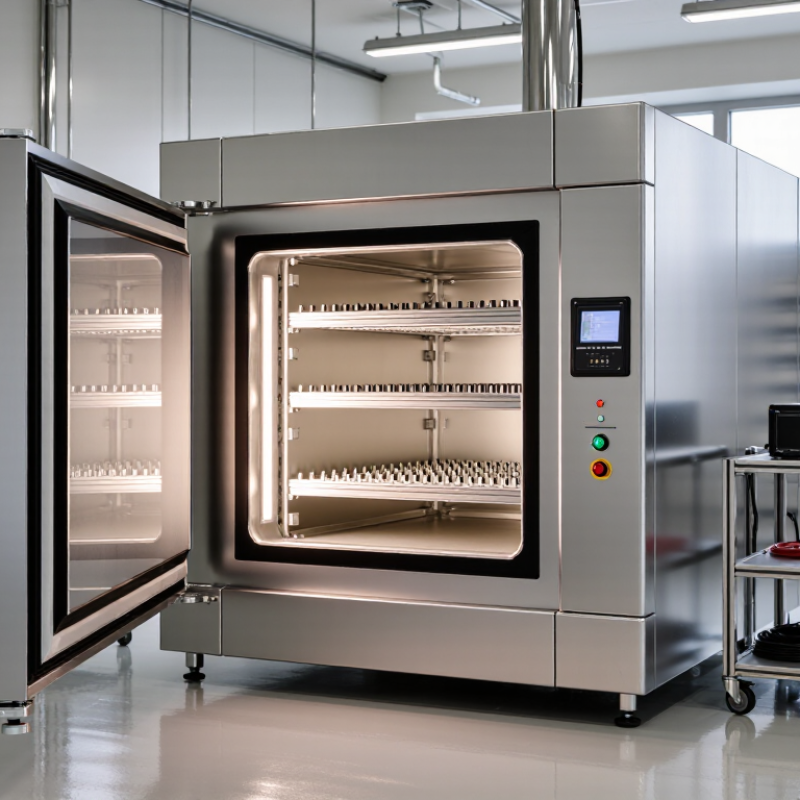
Top Rapid Temperature Change Test Chambers for Sale

What Rapid Temperature Change Test Chambers Are and How They Work

A rapid temperature change test chamber exposes products to programmed hot and cold conditions, revealing weaknesses caused by thermal stress. It is not simply a freezer with a heater. Insulated walls, refrigeration, heating elements, fans, and calibrated sensors work together to control the chamber’s air temperature. The controller follows a defined profile: ramp, dwell, then transition. A test engineer sets the temperature limits, transition rate, and dwell time to match the product and test objective. Airflow and specimen loading matter; a crowded chamber can slow the temperature change around the test item.

The change can be demanding. JEDEC JESD22-A104 describes semiconductor temperature-cycling conditions, including a widely used profile from -40°C to +125°C over 1,000 cycles. That is a test condition, not a universal requirement for every product. IEC 60068-2-14 also provides methods for testing temperature change, with the method chosen to suit the specimen and purpose. A chamber’s displayed air temperature may reach its setpoint before the product itself does. That distinction matters. Experienced operators use sensors near the specimen and verify recovery time, uniformity, and ramp performance under realistic loading. Even a sound profile has limits: real-world vibration, humidity, and operating power may add stresses that a temperature-only test cannot reproduce.

Core Specifications That Define Chamber Performance

Top Rapid Temperature Change Test Chambers for Sale

A chamber’s headline ramp rate is only part of its performance. Check whether the stated rate applies during heating, cooling, or both, and how it was measured. Some specifications describe an empty chamber. A loaded test can behave differently. Ask for ramp-rate data under a defined temperature range, sensor position, and sample load.

Temperature range and uniformity matter just as much. A chamber may reach the required extremes, yet create uneven conditions around a large fixture. Review uniformity figures and the number and placement of control sensors.

Airflow is practical, too. A bulky component can block circulation near a shelf. Small details matter.

Recovery time shows how quickly the chamber returns to its setpoint after a door opening or test transition. Confirm the usable interior dimensions, payload capacity, and electrical requirements before comparing models.

For repeatable results, inspect control resolution, data logging, and calibration documentation. The advertised numbers may look clean; real test setups are not always so tidy. Ask suppliers to clarify test conditions in writing, then compare specifications against your actual product size, thermal mass, and cycle profile.

How to Compare Chambers Available for Sale

Top Rapid Temperature Change Test Chambers for Sale

How to Compare Chambers Available for Sale

Compare chambers by verified performance, not the advertised ramp rate alone. IEC 60068-2-14 describes temperature-change test methods, while IEC 60068-3-5 covers confirmation of temperature-chamber performance. Neither sets one universal ramp rate for every test. Ask whether the quoted rate is measured with an empty chamber or with your actual load. A metal fixture can slow the change and create uneven temperatures. Request logged ramp, recovery, and temperature-uniformity results across the usable workspace.

Check the temperature range, test volume, airflow, sensor placement, and recovery after the door opens. Compare like with like: a stated 10°C/min rate may not mean the chamber can maintain that rate across a full rack of products. Ask for the test conditions behind each figure. A supplier’s data sheet is useful, but it is not the same as an independent performance report. This distinction is easy to overlook.

Applications Across Product Testing and Quality Control

Rapid temperature change chambers help engineers expose weaknesses that steady-temperature storage may miss. During a test, a control unit can move between hot and cold conditions while sensors track its response. This helps reveal solder-joint fatigue, seal movement, display faults, or calibration drift. The IEA’s Global EV Outlook 2024 reported nearly 14 million electric cars sold worldwide in 2023, around 18% of all car sales. That growing installed base raises the value of checking battery-monitoring electronics and cabin sensors before field use.

Semiconductor reliability teams also use thermal cycling to assess components, boards, and assembled devices. The World Semiconductor Trade Statistics Spring 2024 forecast projected global chip sales of US$611.2 billion for 2024, up 16% year over year. That figure describes market growth, not failure rates, but it signals the scale of products entering qualification and quality-control workflows. IEC 60068-2-14 provides test methods for temperature change; engineers still need to select transition rates, dwell times, and limits for the actual product. Details matter. A chamber test cannot reproduce every field condition, and an overly aggressive profile may create failures that users would never see. Test plans should record specimen temperature, sensor placement, and recovery behavior—not only the chamber’s displayed setpoint.

Installation, Operation, and Maintenance Considerations

A rapid temperature change test chamber needs more than floor space. Before purchase, measure the delivery route, door openings, and final clearance for service access. Confirm the floor can support the loaded unit, and check electrical supply and heat rejection requirements against the site conditions. Small details matter. Leave room for airflow around vents, and level the chamber according to its installation instructions. A cramped setup can make routine maintenance unnecessarily difficult.

During operation, select temperature ramp rates that suit both the chamber’s capacity and the test specimen. Place samples with clear gaps between them; tightly packed trays can restrict airflow and create uneven exposure. Attach sensors where they can represent the product, not just the chamber air. Allow conditions to stabilize before recording results, and limit door openings during a cycle. Even a brief interruption may affect the temperature profile. It is tempting to assume a programmed rate equals the rate every sample experiences, but load size and placement can change the outcome.

Maintenance should follow the supplier’s schedule and the actual operating environment. Inspect door seals for cracks, keep air inlets clear, and clean filters or heat-exchange surfaces as specified. Check drains and fittings for moisture or leaks. Keep calibration records, and investigate gradual temperature drift rather than compensating casually in the settings. A quiet chamber is not always a healthy one; unusual vibration or longer recovery times deserve attention. Installation can look perfect on day one, yet small oversights often become inconvenient later.

FAQS

What should I compare when choosing a temperature-change chamber?

Compare temperature range, usable volume, airflow, recovery, and temperature uniformity. Ask for logged results across the working space.

Is the advertised ramp rate enough to judge performance?

No. Ask whether it was measured in an empty chamber or with a representative load. Metal fixtures can slow temperature changes.

How can I verify a chamber’s performance?

Bring a typical load and request a witnessed test. Review calibration records and logged ramp and recovery data. Details matter.

Why does the test load affect results?

A full rack of products may change temperature less evenly than an empty chamber. Real setups rarely match a neat drawing.

What should I check after the chamber door opens?

Ask how quickly the chamber recovers and whether temperatures remain uniform. Door openings can affect test conditions.

What product issues can thermal cycling reveal?

It may expose solder-joint fatigue, moving seals, display faults, or calibration drift. Small defects can appear during repeated hot and cold transitions.

Can a chamber test reproduce every real-world condition?

No. Chamber tests cannot capture every field condition. An overly aggressive profile may reveal failures users would rarely encounter.

What information should a test plan record?

Record transition rates, dwell times, specimen temperature, sensor placement, and recovery behavior. The displayed setpoint alone is not enough.

Conclusion

A Rapid Temperature Change Test Chamber exposes products and materials to controlled, quickly changing temperatures to reveal weaknesses caused by thermal stress. It uses a refrigeration system, heaters, airflow controls, and sensors to move between set conditions while monitoring temperature stability and uniformity. Key specifications include temperature range, change rate, chamber volume, recovery time, control accuracy, and the size and type of test load. Comparing chambers for sale means matching these capabilities to test requirements, available space, utility capacity, and desired monitoring features rather than choosing by a single headline specification.

These chambers support product development and quality control for components and assemblies that may encounter changing environmental conditions. They can help identify cracking, deformation, performance shifts, or connection failures before products enter service. Effective use also depends on suitable installation, safe loading practices, calibrated sensors, documented test profiles, and routine maintenance of refrigeration, airflow, seals, and controls. Choosing a chamber that fits both the testing plan and long-term operating needs can make results more consistent and useful.

Ethan

Ethan

Ethan is a seasoned marketing professional with a deep-seated expertise in our company's innovative product offerings. With years of experience in the industry, he is dedicated to showcasing the unique advantages of our solutions through insightful and engaging content. Ethan regularly updates our......