
✉ [email protected] | Mon–Fri 9:00–18:00 (GMT+8)
FB IN X YT
Environmental Test Equipment Knowledge Center – SFTYE Equipment Co., Ltd.
Industrial Precision Oven Insights – SFTYE Equipment Co., Ltd.
Environmental Simulation Testing Solutions
SFTYE Equipment Manufacturing Facility

Technical Knowledge & Industry Blog

Stay informed with technical insights, testing standards, and environmental chamber innovations from SFTYE Equipment Co., Ltd.

0%

China’s High Altitude Vacuum Thermal Test Chamber market is gaining attention from satellite manufacturers, aerospace laboratories, and advanced electronics companies. These systems reproduce the harsh conditions found above Earth. Low pressure. Severe temperature changes. Limited heat transfer.

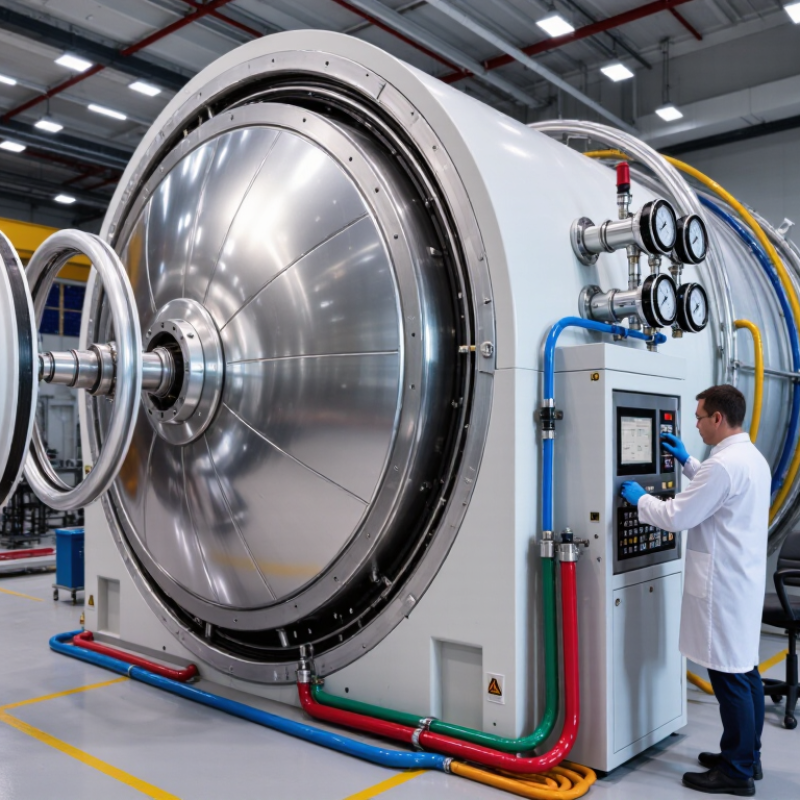
A High Altitude Vacuum Thermal Test Chamber usually combines a sealed vacuum vessel, thermal shrouds, refrigeration, heaters, pressure controls, and measurement instruments. Engineers use it to evaluate satellites, avionics, sensors, batteries, and space-related materials. A reliable chamber must control temperature uniformly, maintain stable vacuum levels, and record accurate data throughout long test cycles. Dr. David G. Gilmore, a recognized spacecraft thermal-control authority, states: “Thermal testing turns calculated performance into demonstrated performance.” This principle remains practical. A simulation may look convincing, but measured behavior often reveals hidden weaknesses.

China offers chambers with different working volumes, temperature ranges, pumping capacities, and automation systems. Some suppliers emphasize customization. Others focus on faster delivery or lower operating costs. Buyers should examine calibration records, leak-rate results, thermal uniformity maps, control-system traceability, and after-sales support. These details matter more than attractive specifications.

The decision is not always simple. A larger chamber may improve production flexibility, yet it can increase energy use and maintenance demands. A compact unit may reduce costs, but product loading becomes limited. That trade-off deserves careful review. This guide introduces key Chinese manufacturers, technical indicators, testing applications, and purchasing considerations. It also questions common marketing claims, because dependable thermal-vacuum performance must be verified, not merely promised.
China Top High Altitude Vacuum Thermal Test Chamber?

High-Altitude Vacuum Thermal Test Chamber: Definition and Purpose

China Top High Altitude Vacuum Thermal Test Chamber?

High-Altitude Vacuum Thermal Test Chamber: Definition and Purpose

A high-altitude vacuum thermal test chamber simulates the cold, low-pressure conditions found above Earth. It removes air and controls temperature around a sealed test article. Without air, convection becomes almost absent. Heat moves mainly through radiation and physical contact with fixtures. The chamber can reproduce pressure, temperature, and exposure time within defined limits.

This equipment helps engineers evaluate spacecraft electronics, sensors, batteries, materials, and sealed assemblies. A typical test may lower pressure gradually, cool the chamber to -60°C, and then raise the temperature repeatedly. Technicians monitor current, voltage, deformation, leakage, and functional responses. These details reveal weak solder joints, brittle seals, insulation problems, and overheating risks. The test is useful because ordinary laboratory conditions can hide failures.

Reliable results depend on calibration, leak checks, clean fixtures, and documented procedures. A small leak may change the pressure profile and weaken the test’s credibility. Poor contact between a specimen and its mounting plate can also distort temperature readings. Real tests are rarely perfect. A rushed setup, an overlooked cable, or an unrealistic thermal ramp may produce misleading confidence. Engineers should review sensor placement and acceptance criteria before loading the chamber. The equipment supports judgment; it cannot replace it.

Chamber Structure and Core Operating Principles

China Top High Altitude Vacuum Thermal Test Chamber?

Chamber Structure and Core Operating Principles

A high-altitude vacuum thermal test chamber combines a sealed vessel, thermal system, vacuum unit, and control cabinet. The chamber body usually uses rigid stainless steel panels with reinforced frames. Internal walls may include polished surfaces, insulation layers, and temperature sensors. A viewing window, electrical feedthroughs, and product fixtures support practical testing. Every seal matters. Even a minor leak can distort pressure readings and increase pump-down time.

During operation, the vacuum system removes air until the chamber reaches the required pressure. The thermal system then controls heating or cooling through embedded heaters, circulating fluid, or a cold source. Sensors continuously measure temperature and pressure at different locations. The controller adjusts output through programmed limits and feedback signals. Stable results depend on balanced airflow and correct sensor placement. A cold corner can expose weak thermal uniformity.

Technicians normally inspect seals, calibrate sensors, and check the empty chamber before testing products. They also record pressure recovery after isolation. This step reveals hidden leakage. In practice, chamber performance is rarely perfect. Fixture materials may release trapped gas. Cable connections may warm unevenly. Engineers should question unusual data instead of accepting the first curve. A reliable chamber needs documented maintenance, traceable calibration, and safety interlocks for doors, pressure, and temperature. Small design compromises can become large measurement errors.

Key Performance Specifications and Environmental Conditions

China Top High Altitude Vacuum Thermal Test Chamber?

A high altitude vacuum thermal test chamber must reproduce pressure, temperature, and heat transfer conditions accurately. Typical systems may reach pressures below 10 Pa, depending on the test requirement. Temperature ranges often extend from below -60°C to above 150°C. Verify the actual range before selecting equipment. The numbers matter.

Temperature uniformity should be checked across the working zone, not only at one sensor. A useful chamber may maintain several calibrated thermocouples around the payload. Heating and cooling rates also affect test realism. For example, a satellite component may experience slow thermal transitions rather than sudden temperature changes. Stable vacuum levels help prevent misleading results. A helium leak test can reveal sealing problems before a long test begins.

I have seen test plans fail because the payload was too large for the effective thermal zone. Working volume, load capacity, and fixture materials deserve careful review. Internal surfaces should reduce outgassing and support repeated cleaning. The pumping system must handle moisture and absorbed gases from the fixture. Otherwise, pressure recovery can take longer than expected. It happens.

Reliable operation also depends on traceable calibration, interlocks, emergency venting, and recorded data. Pressure gauges, temperature sensors, and control software should be checked against recognized procedures. A first estimate of heat load may be wrong, especially with cables and powered devices inside. Recalculate it after installation. Environmental conditions are never perfectly reproduced, so test limits and uncertainties should remain visible in the report.

Major Testing Applications Across Industrial Sectors

China Top High Altitude Vacuum Thermal Test Chamber?

High altitude vacuum thermal chambers support aerospace qualification under reduced pressure and severe temperature changes. According to the 2024 State of the Space Industry Report, the global space economy reached about $570 billion in 2023. This growth increases demand for reliable testing of satellites, avionics, sensors, and propulsion components. Engineers may place a flight computer inside the chamber, cycle temperatures, and monitor power stability, leakage, and material deformation.

The applications extend beyond aerospace. The IEA’s Global EV Outlook 2024 reported more than 14 million electric car sales worldwide in 2023. Battery modules, charging electronics, and thermal-control systems may face altitude-related pressure changes during transport or operation. Vacuum thermal testing can reveal insulation weaknesses, connector faults, and cooling problems before road testing. That small wiring seal matters.

Industrial electronics also benefit from controlled altitude simulation. Semiconductor equipment, optical instruments, medical devices, and communication hardware often require repeated hot-and-cold cycles. Standards such as IEC 60068-2-1, IEC 60068-2-2, and MIL-STD-810H provide structured methods for environmental evaluation. However, standards do not replace engineering judgment. A test profile that looks precise may still miss vibration, humidity, or real installation effects. Chamber operators should record ramp rates, pressure stability, sensor locations, and failure timing. Human error remains possible. That deserves review.

China Top High Altitude Vacuum Thermal Test Chamber? - Major Testing Applications Across Industrial Sectors

Industrial Sector Typical Test Articles Representative Altitude Range Typical Temperature Range Primary Test Objectives Common Reference Standards
Aerospace and Avionics Flight-control electronics, navigation units, cockpit displays, aircraft power supplies Sea level to approximately 30 km equivalent altitude Approximately −70°C to +150°C Verification of low-pressure operation, thermal performance, insulation, arcing resistance, and functional stability IEC 60068-2-13; MIL-STD-810, Method 500; RTCA DO-160, Section 4
Automotive and Electric Vehicles Battery-management systems, electronic control units, sensors, charging modules, lighting assemblies Sea level to approximately 15 km equivalent altitude Approximately −50°C to +150°C Assessment of start-up behavior, dielectric strength, thermal cycling, condensation risk, and electrical reliability ISO 16750-4; IEC 60068-2-1; IEC 60068-2-2; LV 124
Consumer Electronics Smartphones, laptops, cameras, routers, displays, portable electronic devices Sea level to approximately 12 km equivalent altitude Approximately −40°C to +85°C Evaluation of booting, charging, display quality, thermal drift, sealing, and pressure-related mechanical effects IEC 60068-2-13; IEC 60068-2-1; IEC 60068-2-2
Battery and Energy Storage Lithium-ion cells, battery modules, battery packs, energy-storage control systems Sea level to approximately 15 km equivalent altitude Approximately −40°C to +85°C, depending on the test plan Measurement of capacity retention, electrical isolation, pressure sensitivity, thermal behavior, and safety response UN 38.3; IEC 62619; IEC 62133-2; IEC 60068-2-13
Telecommunications Radio units, satellite communication terminals, network equipment, optical transmission devices Sea level to approximately 20 km equivalent altitude Approximately −55°C to +85°C Verification of signal integrity, thermal stability, insulation performance, cooling effectiveness, and enclosure reliability IEC 60068-2-13; IEC 60068-2-1; IEC 60068-2-2
Medical and Laboratory Equipment Patient monitors, diagnostic instruments, portable analyzers, laboratory control electronics Sea level to approximately 12 km equivalent altitude Approximately −40°C to +70°C Confirmation of measurement accuracy, insulation, mechanical operation, alarm function, and environmental robustness IEC 60601-1; IEC 60068-2-13; IEC 60068-2-1; IEC 60068-2-2
Military and Defense Electronics Rugged computers, radar modules, communication systems, power converters, field equipment Sea level to approximately 30 km equivalent altitude Approximately −65°C to +160°C Testing operational readiness, low-pressure effects, thermal endurance, insulation breakdown, and mission reliability MIL-STD-810, Method 500; MIL-STD-202; IEC 60068-2-13
Industrial Control and Power Electronics Inverters, programmable controllers, circuit breakers, relays, industrial sensors Sea level to approximately 10 km equivalent altitude Approximately −40°C to +100°C Evaluation of temperature rise, electrical clearance, insulation coordination, switching reliability, and control accuracy IEC 60068-2-13; IEC 60664-1; IEC 61439

Note: The ranges shown are representative engineering test conditions. Actual altitude, pressure, temperature, ramp rate, dwell time, and test sequence should be established according to the product specification and applicable standard.

How to Select a Leading Chinese Chamber Manufacturer

China Top High Altitude Vacuum Thermal Test Chamber?

How to Select a Leading Chinese Chamber Manufacturer

Selecting a Chinese chamber manufacturer requires more than comparing catalog prices. A reliable supplier should understand vacuum control, thermal cycling, load conditions, and test safety. Ask for previous project records, pressure curves, temperature uniformity data, and calibration documents. Ask for evidence.

Define the required altitude simulation before discussing equipment size. Confirm the working pressure, temperature range, heating and cooling rates, test volume, and product mass. A chamber may reach extreme values but perform poorly under a heavy load. Details matter. Request factory acceptance testing with your actual test profile, not only an empty-chamber demonstration. Check whether the control system records pressure, temperature, alarms, and recovery time clearly.

Manufacturer evaluation should include engineering depth and after-sales support. Review the team’s experience with recognized testing methods, such as IEC 60068 or MIL-STD-810, when applicable. Verify calibration traceability and ask how sensors are replaced. Inspect vacuum seals, viewing windows, pumps, emergency interlocks, and spare-part availability. A remote technical response plan is valuable during production delays. I would not trust polished photographs alone. A common mistake is accepting broad performance claims without test conditions. Request drawings, utility requirements, installation guidance, and service responsibilities in writing. One detail is often missed: confirm whether local technicians can support commissioning after delivery.

FAQS

What is a high-altitude vacuum thermal test chamber?

It is a sealed chamber that simulates low pressure and extreme cold above Earth. Air is removed, while temperature remains controlled.

What does the chamber test?

It tests electronics, sensors, batteries, materials, and sealed assemblies. Engineers monitor voltage, current, leakage, deformation, and function.

Why is vacuum testing useful?

Reduced air limits convection. Heat moves mainly through radiation and physical contact. Hidden overheating and insulation problems become easier to detect.

What temperature conditions can it reproduce?

A typical test may cool the chamber to -60°C. It can also repeat hot-and-cold cycles. Actual limits depend on the equipment.

Which industries use this equipment?

Aerospace, electric vehicles, industrial electronics, medical devices, optical equipment, and communication hardware use these tests.

How should a test article be prepared?

Technicians should check cables, seals, fixtures, sensors, and mounting surfaces. A small setup mistake can change the results.

What can cause inaccurate test data?

Leaks can alter pressure. Poor fixture contact can distort temperature readings. Incorrect ramp rates may create false confidence.

Can chamber testing reproduce every real-world condition?

No. It may not include vibration, humidity, or installation effects. The test supports engineering judgment, but cannot replace it.

What should engineers record during testing?

They should document pressure stability, temperature ramps, sensor locations, failure timing, and acceptance criteria. Details matter.

Is a successful test always conclusive?

Not always. The setup may overlook a weak cable or unrealistic condition. Engineers should review the method before trusting the result.

Conclusion

A High Altitude Vacuum Thermal Test Chamber is a specialized system designed to simulate the combined effects of low atmospheric pressure, extreme temperature, and controlled thermal changes. It is used to evaluate whether products can operate safely and reliably in demanding high-altitude environments. The chamber generally includes a sealed test space, vacuum system, temperature-control unit, monitoring sensors, and automated control software. By adjusting pressure and temperature independently or simultaneously, it can reproduce realistic environmental conditions with high precision.

This type of chamber supports testing in aerospace, aviation, electronics, automotive, communications, energy, and other industrial sectors. Important performance specifications include effective chamber volume, pressure range, temperature range, heating and cooling rates, uniformity, control accuracy, and safety protection. When selecting a leading Chinese manufacturer, users should assess engineering experience, customization capability, testing accuracy, material quality, after-sales support, documentation, and compliance with relevant international standards. A careful comparison helps ensure reliable test results, efficient operation, and long-term equipment value.

Oliver

Oliver

Oliver is a seasoned marketing professional with a deep expertise in our company’s products and services. With a rich background in strategic marketing, he plays a pivotal role in elevating our brand presence and communicating our core strengths. Oliver regularly updates our company’s professional......